

Ice Selection for Tom Collins Cocktails
For a tom collins, reach for large, clear, hard cubes, made from filtered water. They chill fast, dilute slowly, and look clean in a tall glass. A tom collins cocktail balances gin, fresh lemon juice, sugar or simple syrup, and club soda water. Each pour depends on how your ice behaves. You can even swap in a citrus cubed cordial for a brighter twist. This guide compares options for the Best Ice for Tom Collins on performance, fit, compliance, and cost. A crystal collins glass shows off your choice. Stick around for a simple checklist that ties every collins detail together.
Key Takeaways
Choose large, clear ice cubes about 1.5–2 inches wide for a Tom Collins. They chill fast and melt slowly.
Clear ice dilutes your drink slower than cloudy ice. This keeps your soda water fizzy to the last sip.
Match ice shape to your glass. Use long spears for tall Collins glasses to chill evenly.
At home, freeze ice overnight in a Collins ice mold. Bars need fast restocking and high volume.
Check local health rules for food-safe ice. Clear ice machines cost more energy but save on dilution.
Why Ice Matters in a Tom Collins
Chilling, Dilution, and Carbonation
Start with a chilled Collins glass or a chilled highball glass. Fill it with ice. Add gin, fresh lemon juice, and simple syrup. Top with soda water, then stir gently. That build order matters, because your ice sits in the drink from the first pour to the last sip.
Dilution is the key factor here. Shaking breaks up cubes and creates more cold surface area. Clear, dense ice melts slowly and dilutes in a controlled way. A large single cube melts more slowly than several small cubes, so your drink stays cold with less water. That control keeps the balance of your tom collins cocktail intact. You can strain over ice if you want a cleaner, colder pour.
Ice form |
Surface-area-to-volume ratio |
Effect on chilling and dilution |
|---|---|---|
Single large cube (2.5-inch king cube) |
Dramatically lower than a handful of small cubes |
Chills efficiently while releasing the minimum water over time |
Long hand-carved columns or spears |
Lower than standard cubes |
Even chilling from first sip to last, with less carbonation loss |
The Tall Glass Factor
A Collins glass typically holds 10–14 oz (300–415 ml). Its tall, narrow shape reduces surface area, which helps trap carbonation so soda water stays fizzy longer. Ice stacks through the drink's volume and chills it from top to bottom. The narrow column also slows carbonation loss that warming would otherwise accelerate.
Tall ice that fits highball-style glasses suits highballs, a classic tom collins, and gin & tonic. A standard Collins glass measures about 6 in tall with a 2.5 in top diameter. Long spears work well in that space. They chill evenly and keep your drink well chilled without rushing the melt. Pick ice that fits your glass, and the whole tom collins version tastes brighter.
Finding the Best Ice for Tom Collins
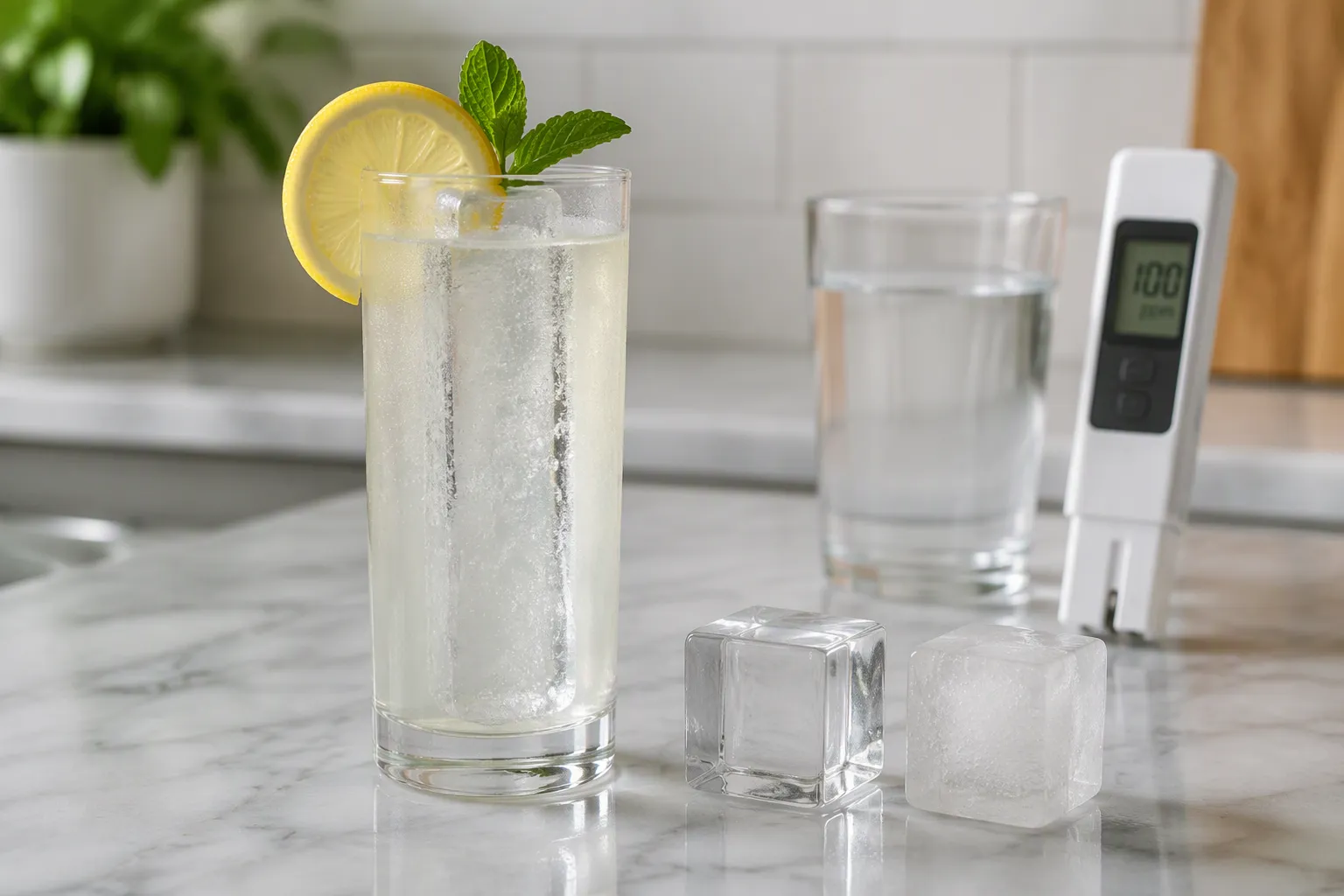
Melt Rate, Clarity, and Glass Fit
Clarity and melt rate both come from how the ice freezes. Directional freezing works like a cleaning step. Water freezes slowly from one side, and the moving ice pushes dirt and air ahead of it into one spot you throw away later. In controlled tests, the leftover purge water had 40–60% more dissolved solids than the source water. That gap shows the impurities left the ice.
Water purity alone will not give you clear ice. Boiling water or ultra-pure water did not make clear cubes in controlled tests. Directional freezing with active agitation is the main driver of clarity. Water quality still matters, though. It affects the impurity level and the melt speed of the finished cube. For the best clarity, purity, and melt rate, aim for water below 100 ppm TDS and pair it with directional freezing and active agitation.
Melt rate follows density. Clear ice has fewer air pockets and more tightly packed crystals, so it melts about 40% slower than cloudy ice. Cloudy ice from a fast, all-directional freeze traps bubbles and minerals in place. Its porous structure raises surface area by about 30%, which speeds dilution by roughly 18%. For a tom collins, that difference decides whether your soda water stays lively to the last sip.
Glass fit is the third piece. A Collins glass runs about 6 inches tall with a 2.5-inch top diameter. Spears and columns stack through that narrow column and chill from top to bottom. Oversized blocks crowd the glass and spill the drink. Measure your glass before you commit to a shape.
A Side-by-Side Comparison Table
The table below sets traditional ice machines against transparent ice machines on the attributes that matter most in a tall drink.
Attribute |
Traditional Ice Machines |
Transparent (Clear) Ice Machines |
|---|---|---|
Freezing speed |
18–22 minutes per batch (fast, all-directional) |
4–6 hours per batch (slow, directional) |
Impurity handling |
Randomly trapped throughout cube |
Pushed to one section and discarded |
Clarity (NTU) |
15–25 NTU (cloudy) |
0.5–2 NTU (clear) |
Melt behavior |
Melts faster; porous structure increases surface area ~30%, accelerating dilution ~18% |
Denser crystals, fewer air pockets, melts ~40% slower |
Read the table as a trade-off, not a ranking. Traditional machines win on speed and volume. Clear-ice machines win on density and slow dilution. Your glass, your service pace, and your budget decide which column fits your bar.
Matching Ice to Your Setting
Home Hosting vs. Bar Service
Start with the Collins Ice Mold if you host at home. It makes tall, slow-melting spears that fit Collins and highball glasses. You fill the mold, freeze it overnight, and pull out spears that stack neatly in a tall glass. That shape gives you the best ice for tom collins pours without any special equipment on the counter.
Home hosting and bar service pull you in different directions. At home, you have time on your side. You can freeze a batch the night before, keep spears in a zip bag, and clear a shelf in the freezer for one tray. A fancy ice cube tray earns its space here, because you prep once and serve all evening. Speed of service matters less when you pour for friends.
Bar service flips the priorities. Guests order fast, and your freezer space is tight. You need volume, quick restocking, and a shape that works with your standard collins glass. Batch prep wins over single molds. A clear ice spear also helps your bartender build a highball glass with a clear ice spear in seconds, and the drink looks sharp on the rail.
Glassware and Garnish
Clarity deserves its own moment. A slower freezing process lets air escape, and that trapped air is what clouds a cube. Distilled water alone still gives cloudy ice if freezing is not slow enough. The water is clean, yet the fast freeze traps bubbles before they can rise. Give the freeze time, and the bubbles leave.
Your glass and garnish should work with the ice, not against it. A Collins glass runs tall and narrow, so a spear stands upright and chills from top to bottom. Skip crushed ice here. It melts fast, waters down your soda water, and muddies the look. Save the small stuff for other drinks.
Garnish follows the same logic. A lemon wheel or a long lemon peel sits well against a clear spear. You see the drink through the ice, and the citrus adds color without hiding the pour. Keep the garnish light, and let the ice do the visual work.
One last tip: chill your glass before you build. A chilled collins stays cold longer, and your ice has less work to do. That small step protects the carbonation and keeps every sip crisp.
Compliance and Cost in Practice
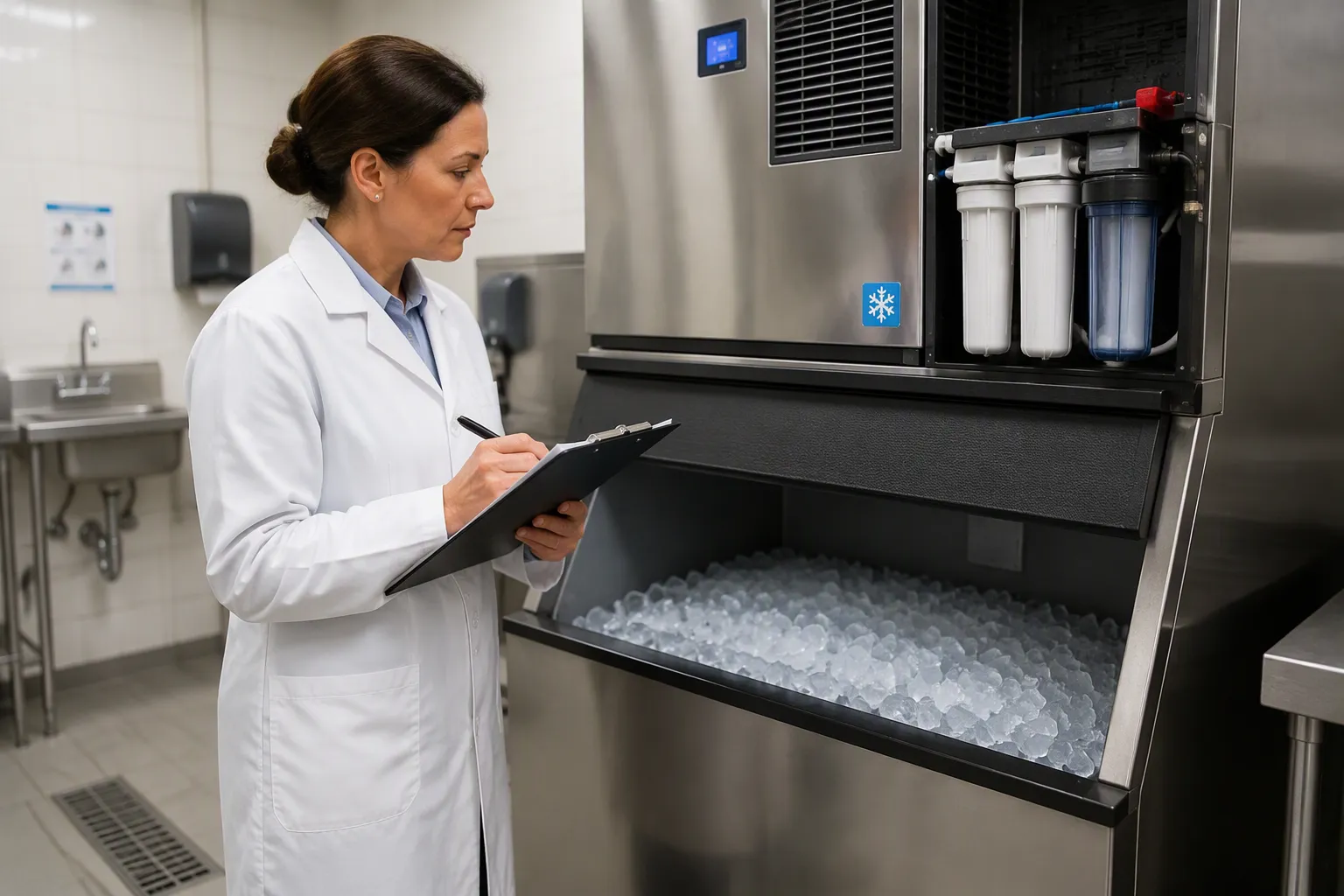
Food-Safe Ice and Water Standards
Federal rules set the basic framework, but state and local health departments have the final say. They handle licensing and permit approval, pre-opening inspections, complaint-driven re-inspections, conditional operation approvals, and emergency shutdown orders. They also decide how strictly the FDA Food Code is interpreted and whether a variance is allowed. Approval from your local health department is the final green light you need for commercial service.
Standard Area |
Requirement |
|---|---|
Production basis |
Packaged ice sold across state lines is regulated as a food and must follow FDA Current Good Manufacturing Practices for manufacturing, packing, and holding human food |
Sanitary conditions |
Ice must be produced, held, and transported under clean and sanitary conditions, with employee hygiene monitored and equipment properly cleaned and maintained |
Water safety |
Water used must be safe and sanitary, e.g., meeting U.S. EPA drinking water standards |
Plumbing |
Facility plumbing must prevent contamination of the ice water supply or stored ice |
Facility/grounds |
Manufacturing facility and grounds must be maintained in sanitary condition |
Know who inspects you. The FDA does not inspect small packaged producers, such as retail stores, that make and package the product directly for consumers for intrastate sales only. The FDA also does not inspect food service establishments that make it for direct use in drinks or for cooling food. Retail food stores and food service establishments fall under state and local authorities instead. The FDA Food Code, which most state and local food regulations are modeled on, contains provisions for the safe and sanitary production and handling of the product.
Equipment, Energy, and Per-Drink Cost
Cost math starts with your equipment. A traditional machine freezes a batch in 18–22 minutes, so it turns out volume fast. A clear-cube machine needs 4–6 hours per batch, so it ties up more freezer time and energy per cube. Weigh that slower cycle against the slower melt. A denser cube dilutes your collins more slowly, so you pour less soda water to keep the drink lively.
Count your real per-drink cost across the whole chain. Add the machine, the energy for each freeze cycle, the water you filter, and the labor for batch prep. Home hosts spread that cost across a few evenings. Bars spread it across hundreds of pours, so speed of service and freezer space often outweigh the slower freeze. Track your own numbers for a week before you commit to a machine.
Large, clear, hard cubes made from filtered water remain the best ice for tom collins pours. They chill fast, dilute slowly, and keep your soda water lively.
Other shapes still earn a place. Spears suit a crystal collins glass, crushed ice cools fast for party punches, and spheres or nugget ice shine in different drinks. A citrus cubed cordial can brighten a tom collins cocktail too. Keep the checklist handy as your quick reference for any tall build.
Summer serving rewards a little practice. Freeze a tray tonight, chill your glass, and taste how each option changes the drink. You will find your favorite pour fast.
FAQ
What size cube works best in a Collins glass?
Aim for cubes in the 1.5–2 inch range. That size chills the drink quickly and melts slowly. A Collins glass runs about 6 inches tall with a 2.5-inch top diameter, so a cube in that range stacks neatly without crowding the rim.
Can I use crushed ice for a Tom Collins?
You can, but expect a different drink. Crushed ice melts fast and waters down your soda water. It also clouds the look of a clear pour. Save it for tiki drinks and party punches, where fast chilling matters more than slow dilution.
Does clear ice really dilute less than cloudy ice?
Yes. Clear ice packs its crystals tightly and holds fewer air pockets, so it melts about 40% slower than cloudy ice. Cloudy ice has a porous structure that raises surface area and speeds dilution. That gap decides whether your carbonation survives to the last sip.
How long does it take to make clear ice at home?
Plan ahead. A directional clear-ice machine needs 4–6 hours per batch, while a traditional machine finishes in 18–22 minutes. At home, fill a Collins ice mold and freeze it overnight. Slow freezing lets trapped air escape, and that is what gives you clarity.
Do I need filtered water for the ice?
Filtered water helps, but it is not the whole story. Aim for water below 100 ppm TDS for the best clarity and melt rate. Distilled water alone still freezes cloudy if the freeze happens too fast, so give it time.
