

The Keys to Master Frozen Cocktail Machine Ratios
You need exact recipe ratios to run frozen drink machines properly. Your frozen cocktail machine needs an ABV between 10% and 13%. You must also keep the Brix sugar level between 13 and 15. Lastly, aim for a total water mix of about 50% to get the right thickness.
Breaking these exact chemical rules causes fast machine failure. Too much alcohol creates a watery mess inside your drink tank. Using too little sugar forms a hard ice block that jams the moving parts. You protect your cooling motor by measuring all drink ingredients carefully. Balancing these main rules creates a great slushy texture every single time.
Key Takeaways
Keep alcohol strength between 10% and 13% to prevent runny mixtures.
Maintain sugar levels between 13 and 15 Brix to prevent hard ice blocks.
Add 30% to 50% water dilution to ensure a smooth slush texture.
Pre-chill all liquid ingredients to speed up freezing time and protect the motor.
The Core Formula for a Balanced Ratio
You must master the balance of alcohol, sugar, and water to create delicious slush treats. Standard cocktail recipes fail in slush machines because freezing changes how ingredients behave. You need a dedicated recipe formula to achieve smooth results. Standard drink formulas use lower liquid dilution levels, but slush batches require specific targets to stay slushy without turning into solid blocks of ice. The proper ingredient ratio keeps your machine motor safe while creating an enjoyable consistency. The table below outlines the ideal metrics for your machine mix.
Parameter |
Supported range/guideline |
|---|---|
ABV (recipe target) |
About 10% ABV, with 15% as an absolute maximum. |
ABV (common slush-machine practice) |
Often kept below 8% ABV. |
Sugar/Brix |
12–14% sugar (roughly 12–14 Brix) to help the drink stay slushy. |
Total water/ice dilution |
About twice standard cocktail dilution, i.e. roughly 30–50% water/ice. |
Following a balanced ratio ensures your equipment runs smoothly without mechanical stress all day long.
Essential Metrics for Perfect Frozen Cocktails
You can customize your frozen drink recipes based on your service style and strength preferences. Lower alcohol levels freeze faster and maintain consistent slush texture during busy hours. Higher alcohol levels demand careful management of sugar content and water volume. The hopper tiers below demonstrate how different alcohol strengths affect batch behavior during commercial service.
Hopper ABV tier |
Recommended use/condition |
|---|---|
1–3% ABV |
Good for brunch and long service; fridge-cold inputs work with minimal adjustment. |
3–5% ABV |
Classic frozen mix territory; sweetness and freeze point need to be aligned. |
5–7% ABV |
Possible, but requires tight control of sugar-bearing ingredients and total dilution to keep texture stable. |
Understanding these specific tiers helps you build ultimate frozen drinks for any large event or party. Serving frozen drinks at high volume requires consistent batch preparation. When you adjust the liquor strength in your recipe, you must also balance the sugar levels so the mix freezes properly inside the cylinder.
Calculating Dilution and Water Volume
Water dilution creates the soft ice crystals that give your slush its signature texture. Conventional recipes normally use 15–25% water dilution, but frozen drink mixes need about twice that amount. Pre-batch dilution should reach roughly 30% to 50% of the total batch volume. Adding water before freezing helps the mix freeze into a solid, balanced texture. You can follow these simple steps to calculate your liquid mix correctly:
Add up all liquid ingredients in milliliters or ounces.
Multiply the total by 0.20 for stirred cocktails or 0.25 for shaken cocktails to find the amount of dilution water needed.
Add that calculated amount of filtered water directly to the batch.
Stir gently, taste, and adjust, then chill before serving.
If you use a blender, you must count crushed ice as part of your total water volume because it melts directly into the drink. Pre-chilling spirits and liquid ingredients before mixing helps reduce unwanted ice melt during preparation. This simple habit keeps your calculated dilution accurate. If a batch will not firm up enough in your machine cylinder, adding extra water provides the quick fix you need. Preparing frozen cocktails requires strict attention to these simple measurement steps every single time. Master these numbers, and you will serve a great slush mix at every gathering.
The Science Behind Perfect Frozen Cocktails
Learning simple liquid chemistry helps you make great frozen drink batches every time. Alcohol and sugars change the way liquids turn into ice inside your machine. Managing these basic natural rules prevents your frozen liquids from getting ruined.
How Alcohol Inhibits Freezing Points
Pure alcohol drops the freezing point of water by disrupting ice formation. Water turns to solid ice at 32 degrees, but liquor breaks this natural pattern. Adding alcohol lowers the needed cold level without changing the heat energy. Ice melts fast because the mix requires much lower temperatures to remain solid.
Ethanol, like salt and sugar, dissolves in water and causes freezing point depression. By lowering the temperature at which water remains liquid, ethanol makes ice melt rapidly even when the surrounding temperature is above the solution's new freezing point. This is why high-proof spirits do not freeze in a domestic freezer.
You must watch your liquor amounts closely while blending frozen drinks. Adding too much liquor keeps your entire mix completely liquid.
Sugar Content and Crystal Structure
Sugar works together with alcohol to shape the texture of your drink. Dissolved sugars physically stop water from forming large, hard ice blocks. The right sugar amount keeps your slushy mix soft, smooth, and easy to pour.
Brix concentration |
Effect on ice crystal size / slush texture |
|---|---|
Below about 10–12°Bx |
Higher freezing point; mixture can freeze too hard against the evaporator, leading to coarse ice and large ice crystals. |
13–15°Bx |
Recommended starting point; enough dissolved solids to avoid hard freeze-up and produce a thick, smooth, dispensable slush. |
15–18°Bx |
Lower freezing point; mixture is less firm. |
Above 18–20°Bx |
Freezes slowly or becomes too soft, with insufficient ice formation. |
Keeping your mix at a 13–15°Bx level creates a steady slush texture. Low sugar makes rough ice chunks that can break the spinning parts. High sugar stops ice from forming, leaving you with just chilled syrup. Combining good sugar levels with balanced alcohol yields fantastic frozen drinks. Your machine will deliver great icy treats without stressing the motor.
Calculating Ingredients for Batch Recipes
Scaling up your favorite cocktail recipes requires basic math. Standard single-serve drinks will not freeze correctly in a commercial machine. You must calculate the proper balances for large containers beforehand.
Calculating the Ideal Alcohol and Sugar Ratio
You can easily calculate your target alcohol level for big batches. Spirits commonly have an alcohol strength of 40–50%, so using 40% ABV spirits provides a realistic starting point for your calculations. You can follow these simple steps to target an 11% ABV level in a 10-liter batch:
ABV = (volume of pure alcohol ÷ total drink volume) × 100.
For a 10 L final batch, 11% ABV means 1.1 L of pure alcohol.
At 40% ABV, the spirit volume required is 1.1 L ÷ 0.40 = 2.75 L.
The dilution calculation does not account for volume contraction, so treating the final 10 L as the total batch volume is an accepted approximation for this estimate.
You also need the right sugar density to ensure smooth machine operation. The sucrose Brix scale shows that 1° Brix equals roughly 1 g of sucrose per 100 g of solution. Because 1 L of water-based mix weighs about 1 kg, you need 130–150 g of sugar per liter of finished liquid. The table below outlines the sugar weights for target sweetness levels.
Target Brix |
Sugar per 100 g final solution |
Approx. sugar per liter final batch |
Slush guidance |
|---|---|---|---|
13° Brix |
13 g |
130 g |
Lower end of working slush window |
14° Brix |
14 g |
140 g |
Mid-range target |
15° Brix |
15 g |
150 g |
Near upper practical limit; dilute if above ~15° |
Maintaining a 12.5–15° Brix practical slush window creates the best frozen cocktails. Check your complete mixture carefully before pouring. Alcohol, acids, fruit solids, and dilution change your final reading.
Incorporating Acid and Frozen Fruit
Fresh citrus juice adds a bright pop to your frozen mix. Lemon and lime juices supply natural acid. Acid cuts through heavy sugar levels and brings fresh flavor to your glass. You should balance sour juices with your sugar base so your frozen drink does not taste harsh.
Adding frozen fruit enriches overall drink consistency. Real fruit puree provides natural solids that build a luscious mouthfeel. Pureed strawberries, mangoes, or peaches help create ultimate frozen drinks for hot days. Real fruit solids alter your final liquid balance, so test your mix before filling the tank.
Measure every liquid ingredient with care. Adding extra water protects your motor from jamming. Precise sugar and spirit levels help you craft perfect frozen cocktails every time. Balancing these ingredients yields fantastic flavor while protecting your machine during busy service. Mastering this simple batch recipe formula allows you to serve top-quality slush drinks with ease.
Machine Execution for Frozen Cocktail Machine Success
Pre-Chilling and Pre-Batching Methods
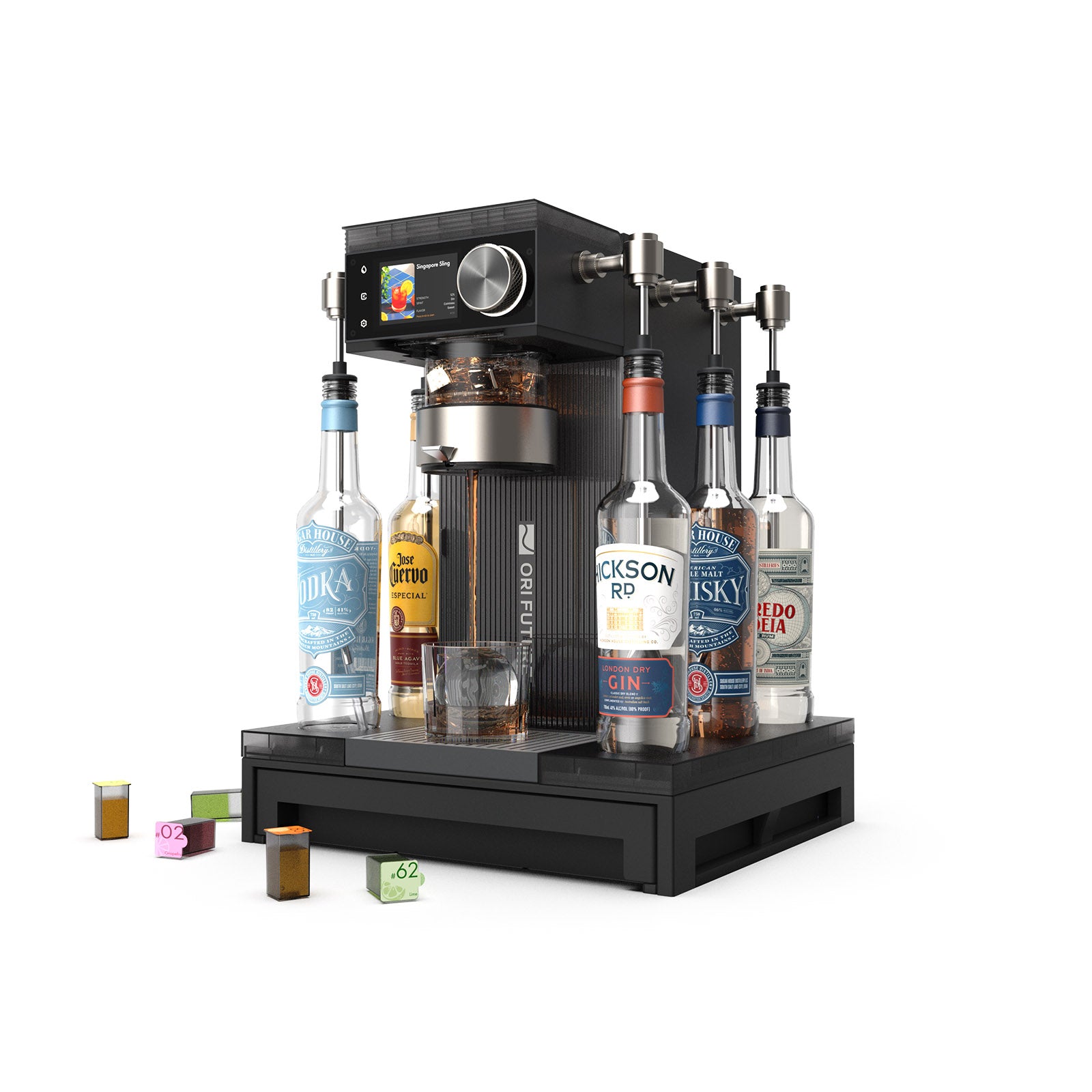
Preparing your mix early saves time and protects your equipment. Automated tools like the ORI Mix Cocktail Maker help you blend liquids evenly. Store pre-made bases in sealed containers inside your fridge overnight. A cold mix reaches the best slush consistency much faster than a warm mix. Vacuum-sealing pre-made bases extends freshness up to 3 to 5 days for larger events. You can also store a spirit-only base in PETG bottles for up to 30 days frozen if filled to 85% capacity. Thaw those bottles at 36°F for 12 hours before service. Keep fine-strained citrus juice with sugar chilled, and use it within 12 hours.
Pouring cold liquids into your frozen cocktail machine reduces freeze times and protects the cooling compressor. Pre-chilled liquid dropped processing times significantly during test trials. The Ninja Slushi dropped from 18:35 to 14:34, while the Dash dropped from 16:33 to 11:25. The Cuisinart cut freeze time from 16:46 to 15:34, and the GreenPan dropped from 34:56 to 32:25. Most mixes freeze in about 20 to 28 minutes. Starting with cold liquids keeps your frozen cocktail program running well.
Optimizing Machine Settings and Mixes
Operating your frozen cocktail machine requires proper tank management. Fill your bowl carefully, and never go over the maximum fill line. Overfilling blocks fast freezing and stresses internal parts. Keep clear airflow around the condenser, and stay away from hot areas.
Adjust your machine settings to get your favorite frozen texture. Choose a lower temperature setting when you want a thicker frozen drink. Pick a higher temperature setting to pour a smooth frozen mix. Planning your batch sizes keeps service moving quickly. A 1.5L batch in a frozen drink machine makes about 8 to 12 servings at 120 to 180 ml each. Pouring chilled mix into your frozen drink machine prevents mechanical strain while you serve refreshing frozen drinks. Using balanced cocktail syrup helps you make awesome frozen slush every time.
Troubleshooting Slush Texture Failures
Fixing your batch is simple when the output looks wrong. Watching your drink mix helps you spot balance problems early.
Fixing Liquid Mixes That Fail to Freeze
Your mix stays completely liquid if it has too much alcohol or sugar. Warm room temperatures, dirty machine coils, or warm liquids also stop freezing.
Failure Symptom |
Main Causes |
|---|---|
Too runny or will not freeze |
High alcohol content, excessive sugar, un-chilled base mix, low refrigerant, or blocked air vents. |
Paddle jammed or solid ice block |
Low sugar levels, low total liquid, or cylinder temperature set too cold. |
Lower your liquor strength by adding water to the tank in small 250 ml steps. Extra water restores balance so your slushy recipe firms up fast.
Resolving Over-Frozen and Icy Chunks
A drink turns into solid ice when your recipe lacks enough sugar. Low sugar levels let water form large ice blocks that jam the paddle.
Stop solid freeze-ups by mixing calculated sugar amounts back into your tank. Adding sugar lowers the freezing point and brings back a smooth slushy feel.
Keeping sugar levels balanced protects your equipment from motor strain and keeps your slushy pour consistent throughout your event.
You can also stir real frozen fruit like berries into your mix. Pureed frozen berries boost your final slush texture while keeping rich natural flavors intact. Blending fruit solids creates a thick feel without watering down the overall drink flavor. Adjust your sugar and water balance whenever you change a batch recipe to keep your machine running smoothly.
Making tasty icy drinks means getting the right blend of liquor, sugar, and pure water. Treat these key items like an exact math problem to keep your favorite recipes reliable. Staying within the target numbers for strength and sweetness gives you a perfect slush texture every time. Using precise liquid amounts keeps your drink blender working fine without hurting the motor inside.
Be sure to weigh every single item carefully before filling your frozen cocktail machine. Taking a moment to check your tools stops runny messes or giant ice blocks. Grab your kitchen scale right now, use these helpful tips, and pour amazing frozen drinks at your big event!
FAQ
What is the ideal alcohol level for a frozen cocktail machine?
Keep your alcohol level between 10% and 13% ABV. Too much alcohol stops your drink mix from freezing right. Too little alcohol creates hard ice blocks in the tank. Measuring your spirits with care keeps your frozen cocktail machine running smoothly.
Why is my frozen drink remaining completely liquid?
Your mix contains too much alcohol or sugar. You can fix this problem by adding water 250 milliliters at a time. This extra water lowers the alcohol strength. Your frozen drinks will firm up quickly into a smooth batch.
How do I calculate sugar for my recipe?
Aim for a 13 to 15 Brix sugar level. Add about 130 to 150 grams of sugar for every liter of mix. Proper sugar levels stop icy chunks from forming and keep a tasty slushy texture without losing rich flavor.
Can I use real fruit when making frozen cocktails?
Yes! Pureed real fruit adds great solids and texture. Remember to test your sweetness level since natural fruit sugars change your final balance. Fresh fruit purees help you serve incredible frozen cocktails every single time.
