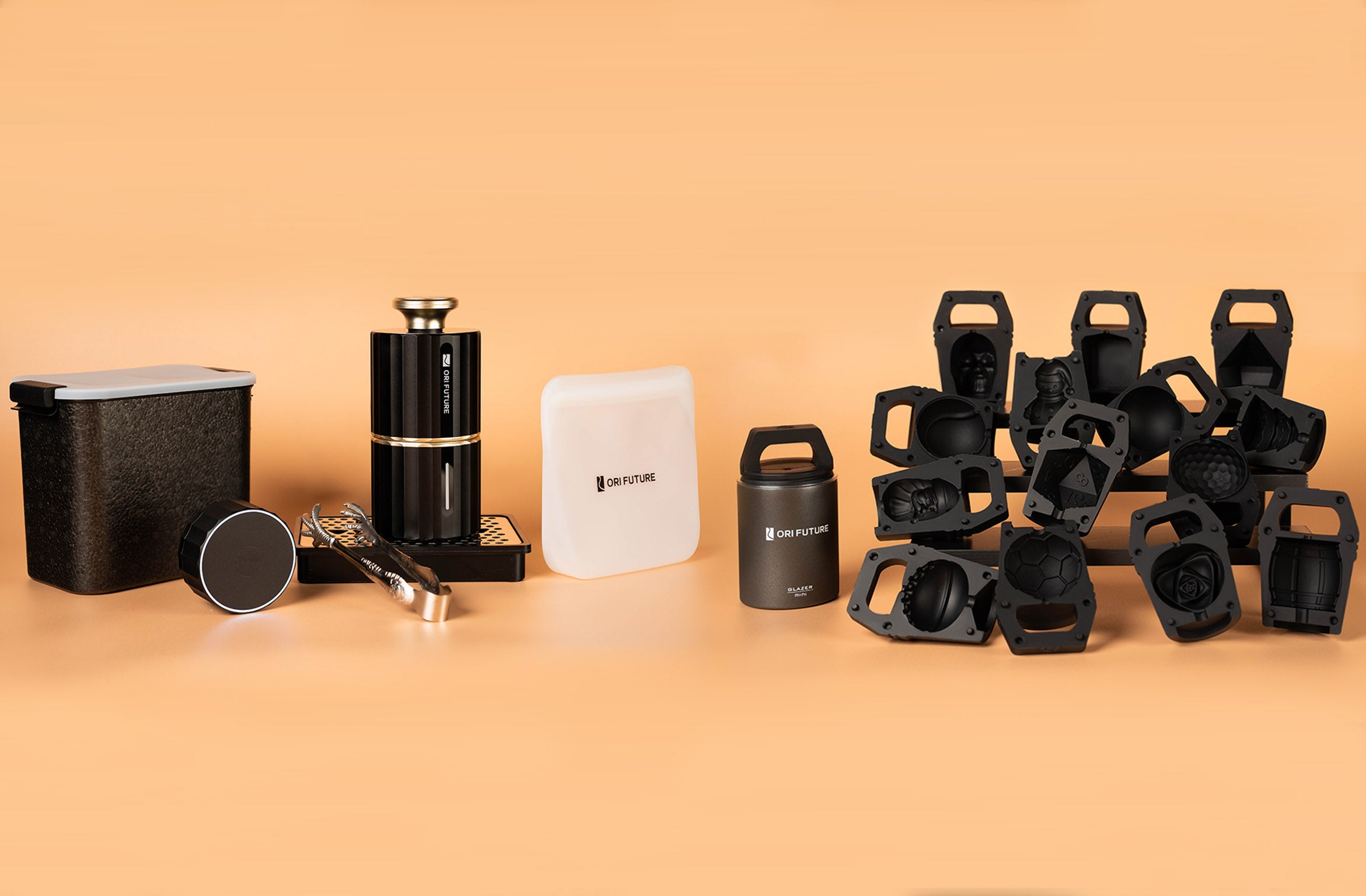
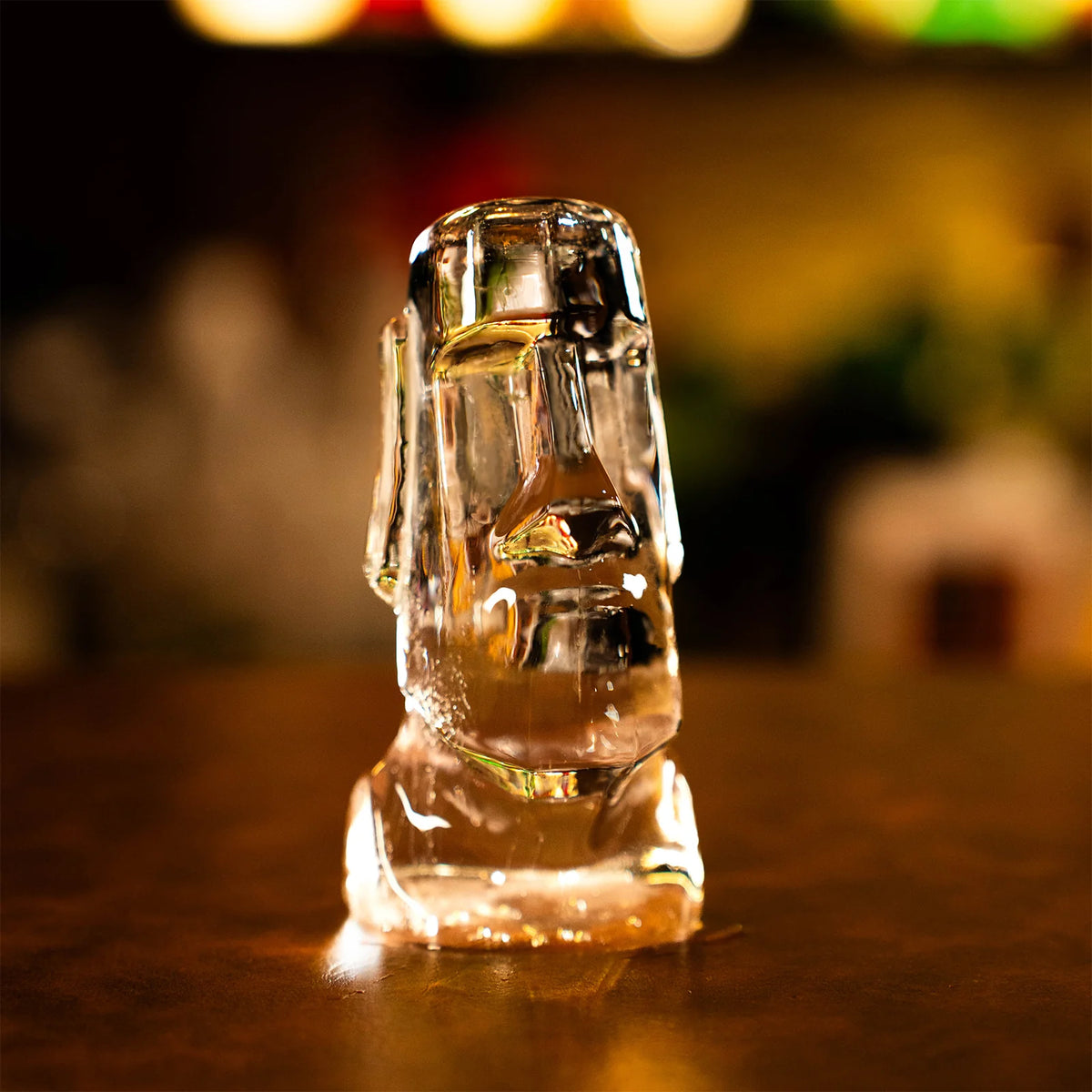

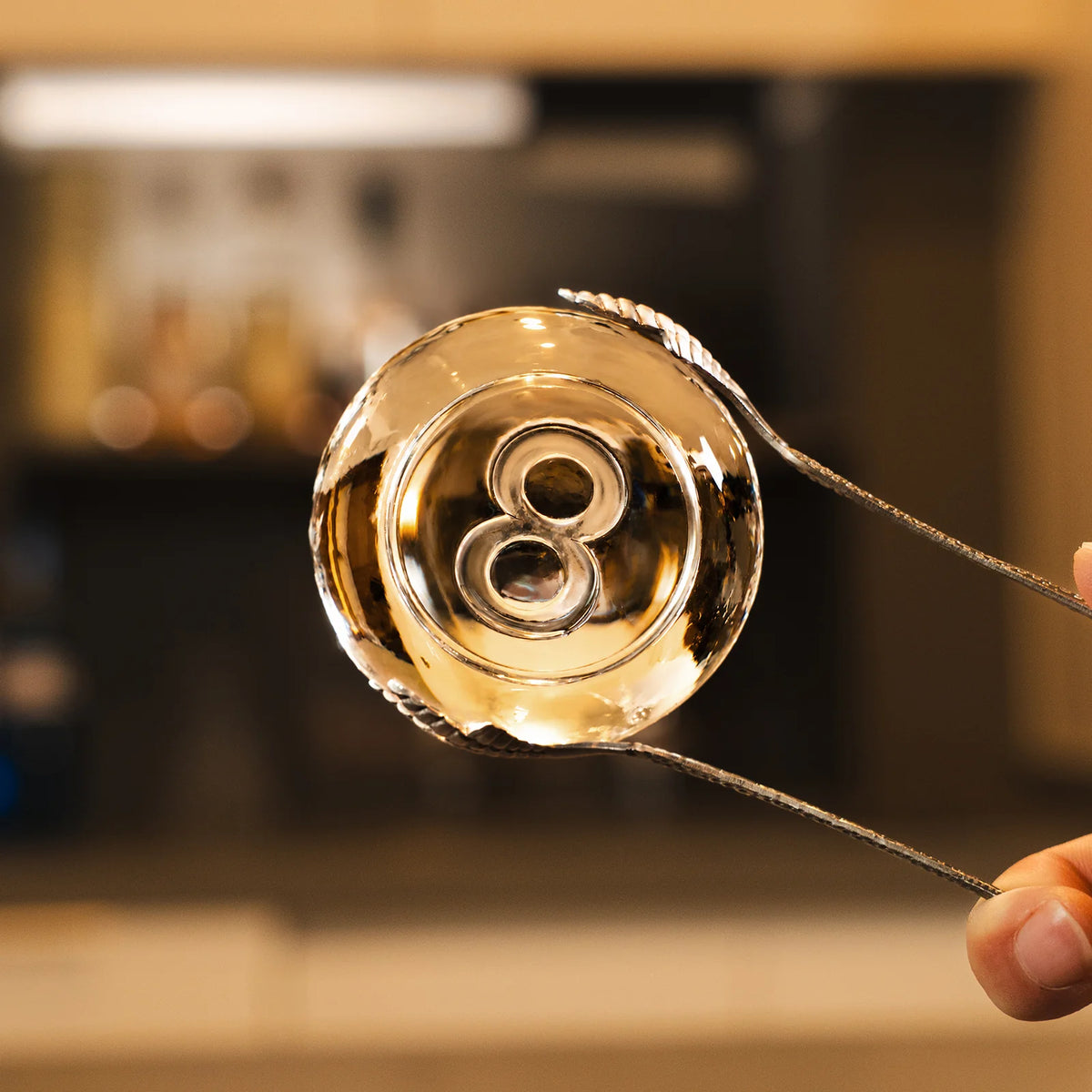
How to Make Crystal-Clear Ice at Home with GLAZER mini – Step-by-Step Guide – ORI Future

Free Shipping on Orders Over $59

GLAZER mini lifestyle

Start freezing. Start discovering. Start with GLAZER mini.

Preface

In this handbook, we'll walk you through every detail of using the GLAZER mini.

Chapter 1 covers how to use the product correctly and addresses common questions.

Chapter 2 helps you choose the right water source—turns out, mineral water is one of the best choices for clear ice and the tap water could be the second.

Chapter 3 explains how different temperatures affect the freezing time and the resulting ice clarity. These are general guidelines; actual results may vary depending on your environment.
Finally, Chapter 4 provides the theoretical foundations we found behind the clear ice-making process.

Chapter 1 - User manual

Troubleshooting

1. Why is the top part of my ice missing?

• Reason: The mold wasn’t completely filled with water.

• Solution: Insert the mold into the liner more gently.

Troubleshooting 1

2. Why does my sphere ice look like an egg?

• Reason: The mold was pressed too tightly into the liner, causing deformation during freezing.

• Solution: Gently place the mold into the liner, avoiding pressure.

Troubleshooting 2

3. Why are there needle-like bubbles in the ice?

• Reason: Water with very low ion content and impurities provides no nucleation sites during freezing, resulting in uncertain freezing patterns.

• Solution: Use water with slightly higher ion concentration, such as tap or mineral water. Avoid purified or distilled water. (See Chapter 2 for details.)

Troubleshooting 3

4. Why are there clear bubbles in the ice?

• Reason: As the temperature drops during freezing, the solubility of gases in water decreases, causing bubbles to form. Some of these bubbles don’t fully escape the mold.

• Solution: Try setting the freezer temperature higher to allow more time for bubbles to escape before freezing completes.

Troubleshooting 4

5. Why is the bottom of the ice cloudy?

• Reason: Bubbles tend to gather around the vent at the bottom during the freezing process.

• Solution: Make sure the vent path is clear and freeze at an optimal rate to allow gases to escape.

Troubleshooting 5

6. Why are there tiny holes around the base of the ice?

• Reason: The air bubbles were not fully released through the bottom vent holes. Since our mold freezes from top to bottom, the air releases as the temperature drops and moves downward, but is blocked by the mold walls.

• Solution: Keep your freezer at a slightly higher temperature and avoid any vibrations.

Troubleshooting 6

7. I can't pull the mold out of the liner.

• Reason: The mold was pressed too tightly into the liner, causing deformation during freezing.

• Solution: Gently place the mold into the liner, avoiding pressure.

8. How do I use the plastic cup (liner)?Can it be reused? Is it sold separately?

• Solution: Use one, keep the other as a backup. Yes, it’s reusable. You can order extras from our store.

Chapter 2 - How can I select my water type?

Based on tests conducted on dozens of water sources, we have found that water with a TDS level between 30–50 mg/L tends to produce significantly clearer ice. Water with TDS levels either above or below this range typically results in less transparent ice.

From our experience, we can infer that mineral water, filtered tap water, and some municipal tap water often fall within this optimal TDS range and are therefore more likely to produce clear ice—though actual results depend on the specific characteristics of the water source used.

Purified water, due to its extremely low ion concentration (always 0), often leads to the formation of needle-like air bubbles within the ice. Conversely, water with higher ion concentrations can cause the bottom of the ice block to appear cloudy.

In the following section, we compare the effects of different TDS levels on ice clarity and outline the patterns we have observed.

Purified water A Purified water - A | TDS 0
Purified water B Purified water - B | TDS 10
Mineral water A Mineral water - A | TDS 34
Mineral water B Mineral water - B | TDS 44
Mineral water C Mineral water - C | TDS 52
Tap water HK Tap water HK | TDS 59
Mineral water D Mineral water - D | TDS 119
Mineral water E Mineral water - E | TDS 176
Mineral water F Mineral water - F | TDS 231

As shown in the image series, we conducted sampling tests on water sources with TDS levels ranging from 0 to 230 mg/L. These sources included distilled water such as Watsons, purified water like Bonaqua, and a variety of mineral waters with increasing ion concentrations—including Fiji, Evian, VOSS, Acqua Panna, and Dasani... The trends we observed were as follows:

At TDS levels of 0 and 10 mg/L, needle-like air bubbles appeared within the ice. As the TDS increased, these bubbles became less pronounced and eventually disappeared. At a TDS level of 34 mg/L, only minimal bubbles were visible in the ice sphere. When the TDS fell within the 44–59 mg/L range, the ice spheres became fully transparent. Beyond 100 mg/L, the bubbles reappeared in a more granular form, resulting in a cloudy appearance. Among the mineral waters tested, Evian had the highest TDS value.

Our findings confirm that while we recommend using mineral water with an appropriate TDS level to produce clear ice—especially given its compact volume, which makes it ideal for freezing multiple ice shapes even in smaller freezers—mineral water is not the only viable option.

Properly filtered or naturally balanced tap water that falls within the optimal TDS range can also produce crystal-clear ice, making it a practical and accessible alternative for many users.

In the next section, we will explore how the choice of water impacts freezing speed and structural integrity of the ice.

Chapter 3 - How long should you leave the mold in the freezer?

Freezing time is often considered the most critical factor in making clear ice, and the primary variable that directly affects freezing time is the temperature of your freezer. In this section, we will detail the approximate time required for completely freezing a clear ice ball at various temperature settings and demonstrate the resulting ice clarity achieved under each condition.

Please note: The water used in all tests within this section has a TDS of about 40 mg/L. And the initial temperature is room temperature.

In -25 In -25°C | Takes 16 hrs
A little cloudy at the bottom.
In -20 In -20°C | Takes 24 hrs
Almost clear with some needle liked bubble.
In -15 In -15°C | Takes 30 hrs
Super clear
In -10 In -10°C | Takes 36 hrs
Super clear
In -5 In -5°C | Takes 42 hrs
Super clear

Under optimal water conditions, it has been demonstrated that the lower the freezer temperature, the slower the freezing rate and the longer the total freezing time—resulting in better ice clarity. With the exception of ice frozen at -25°C, which showed visible accumulation at the bottom, ice produced at other tested temperatures exhibited high transparency.

To further explore how ice forms inside the GLAZER mini, we conducted a time-lapse study of the freezing process at -15°C. This investigation revealed that the volume of crystalline ice grows progressively slower over time until full solidification is achieved.

Let’s take a closer look at how clear ice develops during the freezing process.

Time Lapse of mineral water (TDS 40)
12 hrs After 12 hrs
Ice begins to form on the top surface, with internal sheet-like crystals growing downward.
16 hrs After 16 hrs
Outer surface solidifies; more sheet-like crystals form and start to intersect.
20 hrs After 20 hrs
Upper part fully freezes into a solid dome; the bottom starts to freeze.
24 hrs After 24 hrs
Bottom surface flattens and begins to protrude downward.
27 hrs After 27 hrs
Still requires more time to fully freeze.
29 hrs After 29 hrs
Ice completely forms.

This naturally led to the question: how does the freezing curve differ for water sources with significantly lower or higher TDS levels? To investigate this, we conducted additional tests using purified water (TDS 0) and Evian mineral water (TDS 230).

Using the same methodology and freezing conditions, we recorded their freezing behavior and outcomes. The results are as follows.

Time Lapse of purified water (TDS 0)
Time Lapse of purified water
Time Lapse of Évian mineral water (TDS 230)
Time Lapse of Evian water

Chapter 4 - Technical Reasons.

In this chapter, we will explore the reasons behind the observed phenomena related to ice formation. By referencing third-party literature, we aim to support our experimental findings with external evidence. The discussion will include: why changes in TDS levels lead to corresponding changes in the outcomes, and why the transparency of ice varies with different freezing temperatures.

How TDS Works – A Balance Between Nucleation Promotion and Crystallization Inhibition

The relationship between total dissolved solids (TDS) and ice formation follows a characteristic inverted U-shaped curve, governed by the interplay between thermodynamic and kinetic factors.

At low TDS levels, dissolved ions (e.g., Ca²⁺, Mg²⁺) and particulate matter (e.g., CaCO₃ microcrystals) act as heterogeneous nucleation sites, significantly reducing the activation energy for ice nucleation. These sites facilitate ordered molecular alignment at relatively mild supercooling conditions (e.g., –5°C), in contrast to the homogeneous nucleation in pure water, which typically requires extreme supercooling (~–38°C).

However, at high TDS levels, the system exhibits crystallization inhibition due to several mechanisms:

  • Freezing point depression (Tf=Kf·m) increases supercooling depth, inducing stochastic nucleation and leading to polycrystalline and turbid ice.
  • Viscosity rise, as predicted by the Debye-Hückel theory, restricts molecular diffusion to the growing ice front, reducing crystal growth rates and increasing inclusion of liquid entrapments.
  • Hydration shell formation around ions (e.g., Na⁺, with a hydration radius ~3.6 Å) disrupts the hydrogen bond network, suppressing directional crystal growth and promoting dendritic defects or amorphous regions.

Thus, TDS influences ice clarity and microstructure through a balance between nucleation enhancement at low concentrations and crystallization retardation at high concentrations. The resultant ice quality is determined by the competition between nucleation thermodynamics (G) and kinetic barriers (diffusion, phase separation), explaining the non-linear trend observed.

Based on 189 reviews
77%
(145)
14%
(26)
4%
(8)
4%
(7)
2%
(3)

Nice product

Was really looking forward to using this for my holiday beverages. I have tried several times and the ice is not clear and the top of the tree breaks off everytime I attempt to take it put if the mold.

I was really excited about getting this product in, but have been very disappointed with the results. The ice is not clear as advertised. I have used filtered water and distilled water and still the icd does not come out clear.

The best ice makers ever!

High quality awesome product!

we love ours and giving one to my daughter for christmas, will be envying the chalk lids though.

Nice Mold, Clear Ice

Easy to use and freezes quickly. Cube removal is very easy vs. my other clear ice molds. The diamond is just the right size for me.

What fate has in store.

I bought this for my husband and he loves it! He loves how clear and intricate the cube is! Adds a little fun to his old fashioned.

Love the clatity and consistency of the ice. This liner is made for it and without it you wouldnt get the perfect ice moulds.

Gift for husband

My husband has been obsessed with clear ice so I got this for his birthday for him and it works as expected! It gets a little unclear towards the top so I feel it's a skill issue? But either way happy husband happy wife lol

Brilliant product. Highly recommend.

I was skeptical when buying but the glazer arrived quickly and did just what it promised. I now how perfectly clear cubes of ice. Im going to buy another one!

Very satisfied

I bought the cube mold after having bad experience with cheaper alternatives that didn’t produce clear blocks. Very pleased with the results with the Ori.

D20

Works as it should. Produces nice cube

I accidentally cut the bag trying to get all the duct tape off

Easy!!!!

Best and easiest clear ice!! Nice product!!

Works great, perfect shape of santa. Merry Christmas

D
Halo Smoker
Demetri Panos
Cocktail Game Changer

I love making and mixing cocktails. I have a cocktail smoker. It’s one of those big ones. Like a mini glass cabinet. Place the entire glass inside. Blow torch the wood chips. Smoke fills the inside. It looks like a cool magic trick and when said and done makes the drink taste great. Friends and neighbors love the show! BUT it’s kind of a pain. The smaller smokers have become popular in bars and now for home use. ONE thing; the use of the torch makes it difficult to use inside a an apartment or home. The Halo Smoker not only takes care of that, it does it with style! More importantly with ease! I haven’t stopped using it. What I personally love doing is; I pop a ORI future Ice Sphere in a glass and smoke the ice. Then I pour in my bourbon. The complexity and flavor changes as the ice slowly melts - this also changes the complexity of the cigar I’m smoking as well. The Halo Smoker works so well I gave it as a Birthday Gift. My friend used it during Thanksgiving dinner and he upped the flavor of every cocktail he made - even an espresso martini!! The Halo Smoker puts on it’s own magic show with lights and smoke. It’s cool to watch. After, easy to clean, reset and use again! I’ve since bought two more for Christmas gifts. I know I’ll be having some Halo Smoked cocktails over the Holidays! The kit comes with everything you need! From wood chips, Tongs, charging cord, cleaning brush. It’s SMOKING!

Fabulous Christmas tree

Absolutely love how easy this is and makes the perfect clear Christmas tree have started making one each day ready for Christmas Day - I will be investing in some other shapes too soon - would make a great gift for someone too - but this was a gift to myself!

Love it thank you

R
GLAZER mini | Take ICE Easy!
RUBEN D RODRIGUEZ LARIOS
Tal como la publicidad

así como lo promocionan es igual, si van a comprar un par al menos compren al menos dos bolsas para almacenarlos

Pretty good

I've tried it twice now and although it's easy to use and makes very nice molded cubes and spheres the ice is not completely clear. I'm having to wrap the whole container with a dishtowel to try and slow down freezing even more... Seems like the insulated tumbler is not insulated enough in my opinion.

D20 mini ice mold

Very nice product. Simple and easy to use. While the ice is not 100% clear (more like 90%) it works and looks awesome. Being able to read the numbers when you make a cocktail is awesome. A great addition for any home bartender.

Really suprised how successful this is. The ice is clear. It does take a long time to freeze, but that’s fine. I bought the bag, and am slowly building a stockpile of clear ice skulls. So good i’ve ordered some more molds!

It's OK. The ice isn't as clear as I would have hoped. I've tried filtered, tap. And distilled variants and the distilled gave the most desired clarity. It's lovely and compact, easy to use. The apparatus could be a bit better sealed in order to prevent lines in the ice and 'polar nibs' from the freezing process, but that might be the nature of the rubber moulds. It's a good product and I do recommend, but it's probably best to hedge your expectations.