






The 6 Key Differences Between Ice Ball and Ice Cube Presses
In the high-end world of craft mixology and premium home bars, the quality of your ice is just as critical as the quality of the spirit you pour over it. The pursuit of the perfect, crystal-clear ice shape has led to the rise of specialized gravity presses. These heavy, thermally conductive devices transform rough blocks of frozen water into flawless geometric masterpieces within seconds. However, when outfitting your bar, understanding the nuances of your equipment is vital. Today, we will dissect the fundamental differences between ice ball and ice cube presses, providing you with the technical insight needed to elevate your beverage presentation.

From our experience at Orifuture, many enthusiasts assume that the only variance between these devices is the final visual shape. This is a profound misconception. The differences between ice ball and ice cube presses encompass thermodynamic efficiency, fluid displacement dynamics, glassware compatibility, and mechanical recovery times. We recommend approaching your ice program as an essential component of your cocktail engineering. Whether you are pouring a rare single malt or shaking a complex craft cocktail, selecting the right equipment dictates the final temperature and dilution rate of your drink.
Table of Contents
- 1. Thermodynamic Melting Rates and Dilution
- 2. Glassware Compatibility and Visual Aesthetics
- 3. The Mechanical Engineering of the Press Cavity
- 4. Ice Block Preparation and Input Sizing
- 5. Equipment Versatility and Interchangeability
- 6. Yield, Throughput, and Thermal Recovery
- Summary Table of Key Differences
- Frequently Asked Questions (FAQs)
- References
1. Thermodynamic Melting Rates and Dilution
The most consequential of the differences between ice ball and ice cube presses lies in the physical laws of thermodynamics. In mixology, ice serves two simultaneous functions: chilling the beverage and providing controlled dilution. The rate at which ice melts is directly proportional to its surface-area-to-volume ratio. A sphere is mathematically proven to have the lowest possible surface area for any given volume of a solid object. This means that an ice ball pressed from a sphere mold will melt significantly slower than a cube of the exact same volume.
When sipping neat spirits or spirit-forward cocktails like an Old Fashioned, a slow melt is highly desirable. It allows the drink to chill without rapidly becoming watered down. This is why many aficionados search for the best clear ice ball maker 2026 to perfect their whiskey service. Conversely, a sharp-edged cube pressed from a cube maker has a larger surface area and sharp corners that melt faster. This rapid initial melt is actually beneficial for cocktails that require quick integration of water to open up the flavors of the spirit. From our experience, choosing between these devices requires you to decide if you prioritize minimal dilution (sphere) or rapid, controlled chilling (cube).
2. Glassware Compatibility and Visual Aesthetics
Beyond the science of melting, the physical interaction between the ice and the vessel is a crucial element. The visual differences between ice ball and ice cube presses directly dictate how your final presentation will look. An ice sphere offers a sleek, modern, and uninterrupted visual field. It sits perfectly in the rounded bottom of a traditional snifter or a curved tumbler, leaving an elegant ring of liquid around the perimeter. It is the undisputed champion of the whiskey pour, which is why researching the best bourbon ice makers 2026 inevitably leads to spherical press systems.
On the other hand, an ice cube provides a bold, architectural aesthetic. The sharp 90-degree angles look incredibly striking in a heavy-bottomed Double Old Fashioned (DOF) glass. The cube acts as a geometric anchor within the drink. However, one must ensure that the dimensions of the cube press do not exceed the internal diameter of the chosen glassware, as a square peg in a round glass can create awkward air pockets and uneven fluid displacement. We recommend measuring the internal base of your favorite glassware before committing to either shape.
3. The Mechanical Engineering of the Press Cavity
To truly appreciate these devices, one must understand how they function. Both presses utilize the ambient heat stored in heavy aluminum or copper blocks to melt the raw ice into shape using gravity. However, the differences between ice ball and ice cube presses become highly evident when examining the internal milling of the cavity. A sphere press consists of two perfectly symmetrical hemispherical domes. As the top block descends, the water escapes evenly along a singular horizontal parting line.
A cube press, however, is mechanically more complex to engineer. Creating sharp corners requires precise venting channels to allow the meltwater to escape without causing the press to vacuum-seal or stall out before reaching the bottom. The thermal mass required to melt a block of ice into a cube with sharp corners is often distributed differently than in a spherical press. If you look at top clear ice maker reviews, you will notice that high-quality cube presses are highly praised for their intricate water-displacement grooving, which prevents the ice from fracturing under the immense weight of the aluminum top block.
4. Ice Block Preparation and Input Sizing
A gravity press is only as good as the raw ice you feed into it. To achieve glass-like clarity, you must start with a block of directionally frozen ice. The geometric differences between ice ball and ice cube presses dictate the exact size and shape of the raw block you must prepare. A sphere press is quite forgiving; as long as the raw block is slightly larger than the final diameter of the sphere, the press will efficiently melt off the excess corners.
A cube press is much more demanding regarding input dimensions. Because the final shape retains corners, the raw block must be significantly larger to ensure that the press has enough material to carve out the sharp, perfect edges without leaving rounded, unfinished corners. This requires a more robust freezing setup. For those looking to master this preparatory phase, we recommend studying DIY clear ice directional freezing techniques to ensure your raw blanks are adequately sized and completely free of dissolved gases and impurities.
5. Equipment Versatility and Interchangeability
Historically, one of the most frustrating differences between ice ball and ice cube presses was the lack of versatility. If you bought a heavy aluminum sphere press, you were locked into making spheres forever. Commercial bars often had to purchase multiple expensive, heavy presses to accommodate different drink requests. At Orifuture, we recognized this massive inefficiency and revolutionized the market.

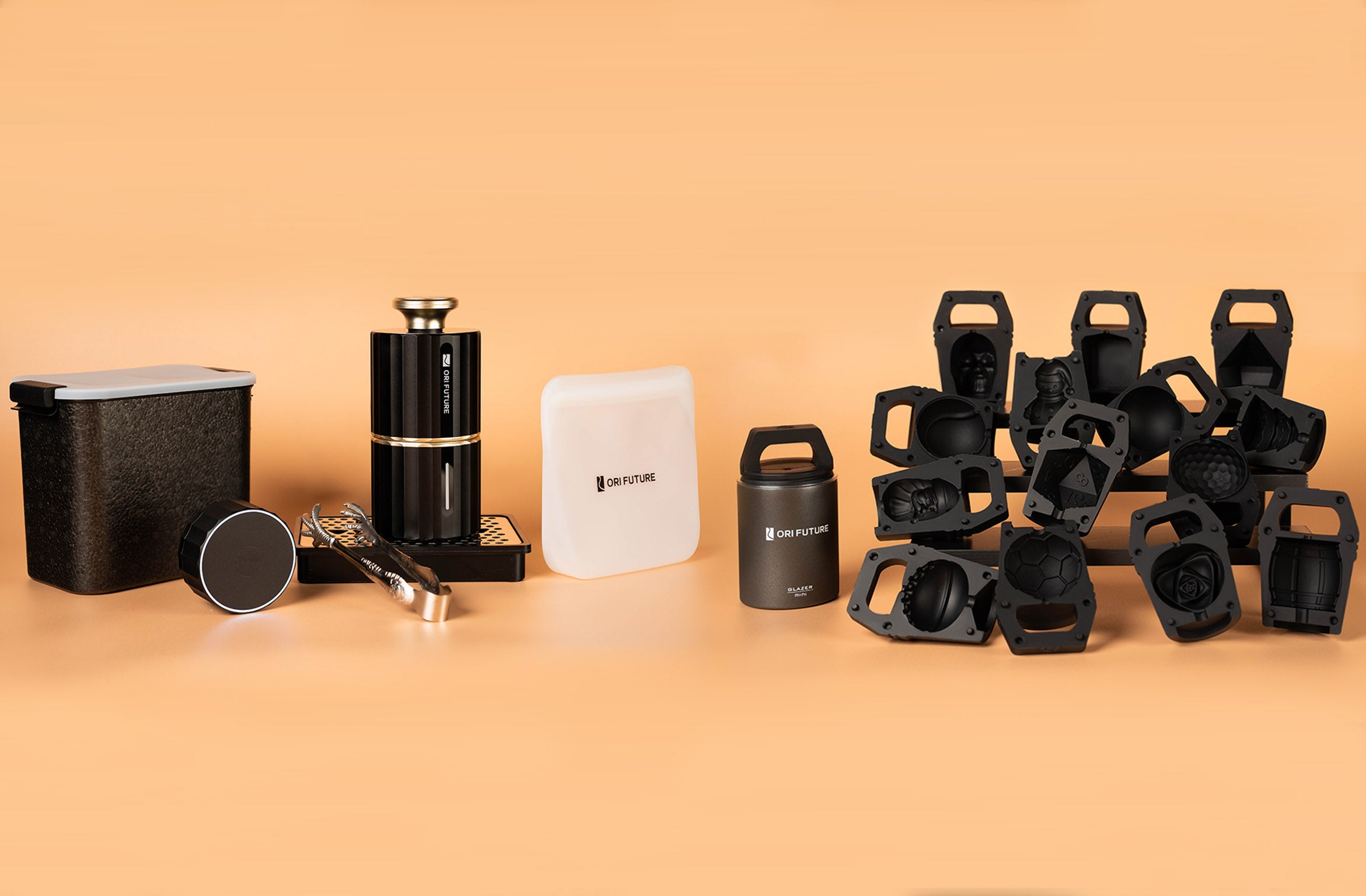
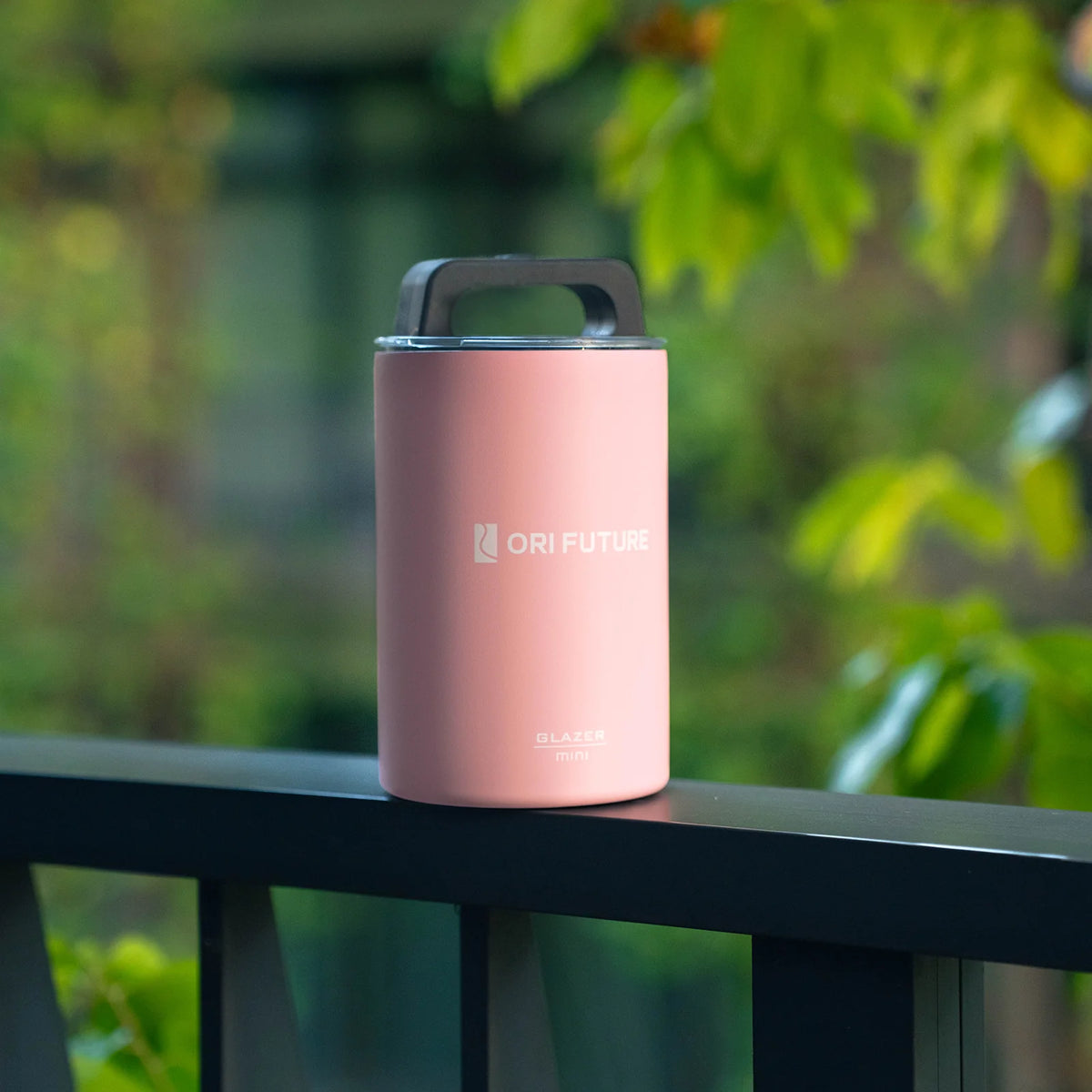
We recommend our GLAZER mini Classic ice ball presses to solve this exact problem. Why settle for one shape? The GLAZER mini is engineered to craft professional-grade 100% clear ice with an optimized tumbler design that guarantees crystal-clear results every time. Furthermore, it completely negates the rigid differences between ice ball and ice cube presses by offering 10+ unique shapes. You can choose from Sphere, Cube, Diamond, Boat, D20, or Skull-shaped molds. This space-saving minimalist design fits anywhere in your fridge, conserves water, and allows you to store multiple molds, saying yes to clutter-free freezing and boundless creative presentation.
6. Yield, Throughput, and Thermal Recovery
In a commercial setting, or during a busy home cocktail party, the speed at which you can produce ice is a critical logistical factor. The thermal recovery differences between ice ball and ice cube presses are significant. When a press melts a block of ice, the aluminum block absorbs the cold, significantly dropping in temperature. Before you can press a second block, the aluminum must recover back to ambient room temperature, or be run under warm water.
Because a cube press typically requires melting away a larger volume of excess ice to achieve those sharp corners, it absorbs more cold energy and subsequently requires a longer recovery time between presses compared to a sphere press. If you are serving a large crowd, managing this throughput is essential. Many users attempt to bypass traditional freezing systems entirely and wonder about automated solutions. If you are curious about the endurance of automated systems, you might ask can you leave ice maker on all day, but remember that true, artisanal clear ice shapes are still best achieved through the manual pressing of directionally frozen blanks.
Summary Table of Key Differences
To assist you in making the best purchasing decision for your bar program, we have compiled the primary differences between ice ball and ice cube presses into a quick-reference guide.
| Feature / Specification | Ice Ball (Sphere) Press | Ice Cube Press |
|---|---|---|
| Dilution Rate | Very Slow (Lowest surface area to volume ratio) | Moderate to Fast (Larger surface area via sharp corners) |
| Ideal Beverage Use | Neat pours, rare whiskeys, low-dilution cocktails | Old Fashioneds, Negronis, cocktails needing slight water integration |
| Glassware Compatibility | Snifters, curved tumblers, standard rocks glasses | Heavy-bottomed Double Old Fashioned (DOF) glasses |
| Raw Ice Input Requirement | Forgiving; requires a moderately sized rough block | Strict; requires a large block to ensure perfect, sharp corners |
| Thermal Recovery Time | Faster (Melts less total mass to achieve the final shape) | Slower (Absorbs more cold energy to carve out the corners) |
| Versatility | Traditionally single-shape unless using an interchangeable system like GLAZER mini | Traditionally single-shape unless using an interchangeable system like GLAZER mini |
Frequently Asked Questions (FAQs)
No. A press simply uses thermal conductivity to shape existing ice; it cannot change the internal clarity of the ice block. If you put a cloudy, aerated block of ice into a premium press, you will get a perfectly shaped, cloudy piece of ice. You must begin with directionally frozen, clear ice blanks. We highly recommend reviewing our guide on easy steps to perfect ice balls to master the initial freezing process.
From our experience, heating the press aggressively with boiling water or a heat gun is dangerous and can damage the protective anodized coating of the aluminum. You only need to run the press under warm tap water for a few seconds to bring it back to ambient room temperature between uses. The massive thermal conductivity of the metal does the heavy lifting.
Ice cracking—also known as thermal shock—occurs when ice taken directly from a sub-zero freezer is subjected immediately to the warm aluminum press. To prevent this, you must "temper" your ice. Let the raw ice block sit at room temperature for 5 to 10 minutes until it looks wet and glossy before placing it into the press. This simple step eliminates micro-fractures.
References
To ensure the scientific accuracy regarding the thermodynamics of melting rates and thermal conductivity discussed in our analysis of the differences between ice ball and ice cube presses, we adhere to established principles of physics and fluid dynamics. For further reading on the science of ice and thermodynamics, we refer to the following authoritative sources:
