





Is there a difference between ice ball presses in 2026?
In the realm of high-end mixology and luxury spirit appreciation, the visual and thermodynamic quality of ice is paramount. A perfectly formed, crystal-clear ice sphere not only elevates the aesthetic presentation of a premium whiskey but also fundamentally alters the drinking experience by minimizing the surface-area-to-volume ratio, thereby drastically reducing unwanted dilution. As the demand for perfect ice has surged in both commercial hospitality and residential wet bars, the market has been flooded with various tools claiming to shape ice perfectly. This leads industry professionals and enthusiasts to constantly ask: is there a difference between ice ball presses?

From our experience at Orifuture, the answer is a resounding and emphatic yes. To the untrained eye, two pieces of metal carving ice might seem identical in function, but the underlying engineering, thermal dynamics, and operational efficiency vary wildly. The difference between ice ball presses dictates whether a bartender can serve ten flawless drinks in ten minutes or if they are forced to wait half an hour for a block of aluminum to thaw. We recommend evaluating these devices not just as novelty items, but as precision culinary instruments. In this comprehensive, authoritative guide, we will dissect the mechanical evolution of ice shaping, outline the severe operational difference between ice ball presses on the market today, and introduce the groundbreaking technology that is defining the future of craft cocktails.
Table of Contents
1. The Thermodynamics of Ice Shaping
To truly understand the difference between ice ball presses, one must understand the physics of how they operate. Traditional ice presses do not carve ice with sharp blades; they melt it using ambient heat transfer. A large block of highly conductive metal, usually aircraft-grade aluminum or copper, is placed over a rough cube of ice. Because the metal is at room temperature, it rapidly transfers its heat into the ice, melting the edges and allowing gravity to pull the top half of the press downward, forming a perfect sphere.
However, the laws of thermodynamics dictate a severe limitation for these traditional models. As the metal transfers heat into the ice, the ice simultaneously transfers cold into the metal. Within one or two presses, a traditional aluminum device reaches thermal equilibrium with the ice. It becomes freezing cold and ceases to function. This mechanical limitation is the most critical difference between ice ball presses. While a traditional gravity press works beautifully for a single drink at home, it becomes a complete operational failure in a fast-paced commercial environment where back-to-back orders are the standard.
2. Evaluating the difference between ice ball presses
When procuring equipment for a high-volume bar, a luxury catering service, or an elite home setup, analyzing the difference between ice ball presses requires looking past the polished exterior and focusing on operational metrics.
2.1 Pressing Time and Thermal Recovery
The most glaring difference between ice ball presses is the recovery time. A standard unheated press typically requires 5 minutes to press a single sphere. Worse yet, it requires up to 30 minutes of recovery time—often needing to be submerged in hot water—before it absorbs enough ambient heat for the next round. In contrast, technologically advanced presses utilize active heating elements to maintain a constant thermal output, allowing for back-to-back pressing without any downtime.
2.2 Portability and Ergonomics
Because traditional presses rely entirely on the sheer mass of the metal and gravity to push through the ice, they are exceptionally heavy. A standard solid aluminum or copper press frequently weighs more than 10 pounds. This excessive weight makes them cumbersome to operate, hazardous if dropped, and practically impossible for mobile bartenders or catering teams to transport. The difference between ice ball presses regarding weight is staggering when you introduce motorized or actively heated systems that do not rely on dead weight.
2.3 Shape Versatility and Insert Technology
Until recently, buying an ice press meant committing to a single shape—the sphere. If a mixologist wanted to serve a cocktail over a diamond or a skull, they had to purchase an entirely separate, heavy, and expensive machine. Modern engineering has bridged this gap. The difference between ice ball presses now includes the ability to rapidly swap internal molding plates, transforming a single machine into a versatile ice-sculpting powerhouse capable of producing infinite variations.
3. The GLAZER Press whiskey ice ball machine Advantage

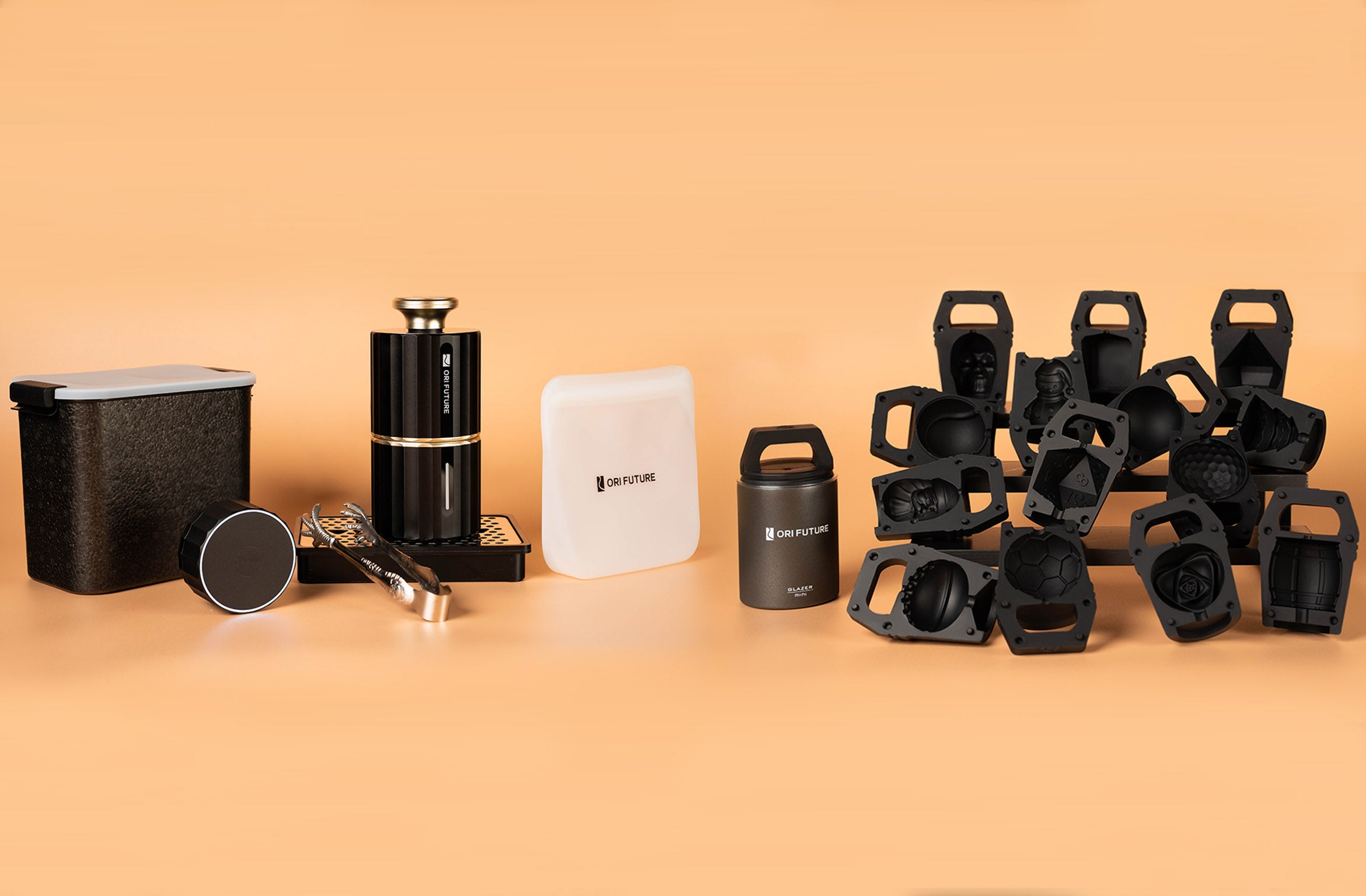
At Orifuture, we have engineered the solution to the historic flaws of traditional gravity presses. We proudly present the GLAZER Press whiskey ice ball machine, which is unequivocally The Most Advanced ICE Press in the World. By integrating active thermal technology and modular design, the GLAZER Press eliminates the frustrations of waiting, heating water baths, and heavy lifting.
When you ask if there is a difference between ice ball presses, the GLAZER Press serves as the definitive answer. Unlike passive metal blocks, the GLAZER Press features an active Heating Pulse system that raises the internal temperature to exactly 100 degrees Fahrenheit (37.8 degrees Celsius). This precise thermal output ensures that the ice melts swiftly and smoothly, without thermal shock that could crack clear ice. Because it generates its own heat, it allows for continuous, back-to-back pressing. The pressing time is an astonishing 2 mins per round, completely eliminating the archaic 5 mins and up to 30 min next round recovery penalty associated with traditional models.
3.1 Advanced Technical Specifications
The engineering behind the GLAZER Press is meticulous. It operates universally on 100~120 V / 220~240 V power grids with a highly efficient 600 W draw. Despite housing an active heating element, the machine is incredibly sleek. The color is a sophisticated Black, and the product size is a compact 6 by 6 by 11 inches (16 by 16 by 28 cm).
One of the most profound markers highlighting the difference between ice ball presses is portability. The GLAZER Press product weight is only ~4.4 pounds (~2 kg), making it highly portable (Yes, 4 lbs) compared to traditional models that are absolutely not portable (No, >10 lbs). It is designed to function flawlessly in an operating ambient temperature of 60 degrees to 86 degrees Fahrenheit (15 degrees to 30 degrees Celsius).
Furthermore, the GLAZER Press redefines versatility. It utilizes magnetic inserts that can be swapped in seconds. Instead of being locked into only one shape, bartenders can change inserts to produce a Skull, Diamond, Heart, Saturn, or a traditional Sphere. These inserts have a size of 3.2 by 3.2 by 1.6 inches (8 by 8 by 4 cm) and an inserts weight of 0.9~1.5 pounds (400~700 grams). This magnetic, modular approach is the ultimate difference between ice ball presses today.
4. Summary Table: GLAZER Press vs. Traditional Presses
To clearly illustrate the operational and physical difference between ice ball presses, we have compiled the following direct comparison table.
| Feature / Specification | GLAZER Press (Ours) | Traditional Gravity Presses (Others) |
|---|---|---|
| Back to back Pressing | Yes (Active 600W Heating Pulse) | No (Not Heated, reaches thermal equilibrium) |
| Change Inserts | Skull, Diamond, Heart, Saturn, Sphere… | Only one shape (Solid block design) |
| Pressing Time | 2 mins per round | 5 mins and up to 30 min next round (requires hot water bath) |
| Magnetic Inserts | Yes (Rapid hot-swapping) | No |
| Portable | Yes (~4.4 lbs / ~2 kg) | No (>10 lbs of solid metal) |
| Heating Pulse Temp. | 100 °F (37.8 °C) | N/A (Relies on ambient room temperature) |
5. Frequently Asked Questions (FAQs)
What causes the cloudy center in standard ice cubes, and how do I get clear ice for my press?
Cloudy ice is caused by trapped air bubbles and mineral impurities freezing in the center of the cube. To achieve crystal-clear ice for your GLAZER Press, you must use directional freezing techniques. This forces the water to freeze from the top down, pushing air and impurities to the bottom, which can then be chipped away before pressing.
Why is the difference between ice ball presses regarding weight so significant?
Traditional presses require extreme mass (over 10 pounds) because they rely on gravity to force the metal down as it melts the ice. The GLAZER Press eliminates this need through its active 600 W heating element. By melting the ice efficiently with a controlled 100 °F pulse, we reduced the product weight to a highly portable 4.4 pounds, preventing bartender fatigue and potential dropping hazards.
Can I use the GLAZER Press whiskey ice ball machine outdoors?
Yes, as long as you have access to a power source (100~120 V / 220~240 V). However, keep in mind the optimal operating ambient temperature is between 60° to 86°F (15° to 30°C). Operating in extreme freezing conditions may slightly increase the 2-minute pressing time, but the active heating element guarantees it will perform far better than any unheated outdoor alternative.
How exactly do the magnetic inserts work?
A massive difference between ice ball presses is our modularity. The interior of the GLAZER Press contains strong, heat-conductive magnetic mounts. You simply pull out the Sphere insert and snap in the Skull, Diamond, Heart, or Saturn insert. The heat transfers perfectly through the magnetic connection, allowing you to change shapes instantly without needing multiple heavy machines.
6. Industry References
To further explore the science of ice, cocktail dilution rates, and high-end bar operations, we recommend reviewing the following authoritative resources:
