




If you have ever savored a premium whiskey or crafted a meticulous cocktail, you might have wondered about the ice in your glass. Does its shape matter? The short answer is a resounding yes. Spherical ice cubes melt approximately 20-40% slower than traditional cubes, fundamentally changing how your drink cools and dilutes. This isn't just bartender lore; it's a principle of physics with delicious implications. This guide dives deep into the geometry of ice, the science of melting, and how modern tools like the GLAZER Press whiskey ice ball machine are revolutionizing home entertainment by giving you professional control over this crucial element.

Table of Contents
The Physics Behind Ice Melting
Surface Area to Volume Ratio: The Fundamental Principle
At the heart of the spherical ice mystery lies a simple geometric truth: for any given volume, a sphere has the smallest possible surface area. Imagine a cube and a sphere made from the exact same amount of water. The cube's corners and edges expose more ice to the surrounding liquid. This exposure is the engine of melting and dilution. A standard one-ounce ice cube has about 2.16 square inches of surface area, while a one-ounce sphere has only about 1.74 square inches. This reduction of nearly 20% in surface area is the primary reason a spherical ice cube melts slower. Less surface touching your whiskey or cocktail means fewer points for heat transfer to occur, leading to a more gradual release of water.
How Temperature and Environment Affect Melting Dynamics
While shape is critical, the environment plays a supporting role. Research from institutions like New York University shows that water temperature dictates how ice melts morphologically. In very cold water (below about 5°C/41°F), ice develops downward-pointing spikes. In warmer water, it forms upward-pointing spires. This happens because melting creates subtle density currents in the liquid around the ice. Furthermore, agitation matters. Stirring your drink accelerates melting regardless of shape, as moving liquid carries heat away from the ice surface faster. Even the mineral content of your water can influence these micro-currents, meaning the melt of an ice sphere in tap water might differ slightly from one in distilled water.
Scientific Findings: Do Spherical Ice Cubes Actually Melt Slower?

Controlled Experimental Evidence
Controlled experiments put this geometric theory to the test. In one notable study, scientists compared a 122.3-gram ice sphere to 114.1 grams of ice cubes in identical servings of bourbon. The results were clear and quantitative:
- Melting Speed: The ice cubes melted at 0.162 grams per second. The sphere melted at just 0.113 grams per second. This means the cubes melted 43% faster by weight.
- Total Dilution: After the experiment, the cubes had contributed 23.3 grams of meltwater, while the sphere contributed only 19.8 grams—an 18% increase in dilution from the cubes.
- Cooling Curve: The cubes cooled the drink faster initially, but the sphere provided a more stable, gradual temperature decline, avoiding an overly sharp temperature drop that can numb the palate.
The conclusion was unambiguous: ice spheres melt slower and dilute less, making them ideal for drinks where preserving the spirit's character is paramount.
Real-World Applications and Observations
This science is put into practice daily in high-end bars worldwide. The spherical ice cube is not just a trend; it's a tool for precision drink building. For slow-sipped, spirit-forward drinks like an Old Fashioned or a neat single malt scotch, the sphere is the gold standard. It provides sustained cooling without flooding the drink with water, allowing the complex notes of the spirit to unfold gradually over 20-30 minutes. The larger the sphere, the more pronounced this effect becomes, thanks to an even more favorable surface-area-to-volume ratio.
GLAZER Press: Craft Professional Ice in Minutes
Transform ordinary ice blocks into stunning, slow-melting shapes with the world's most advanced ice press.
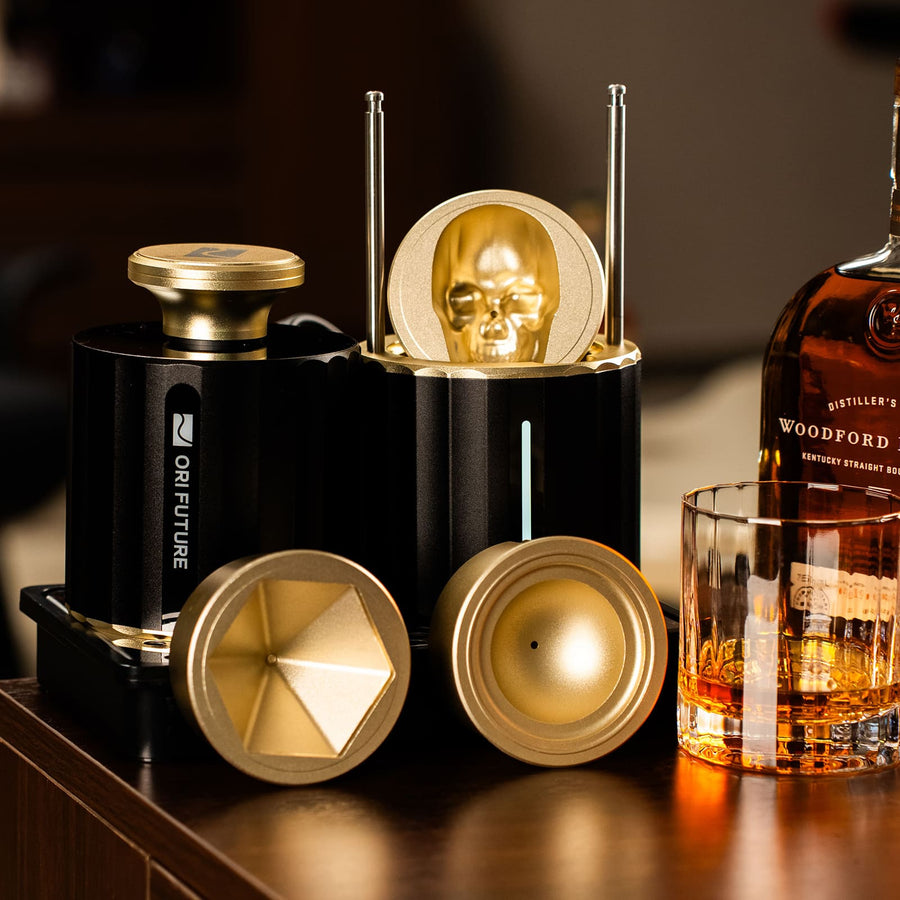
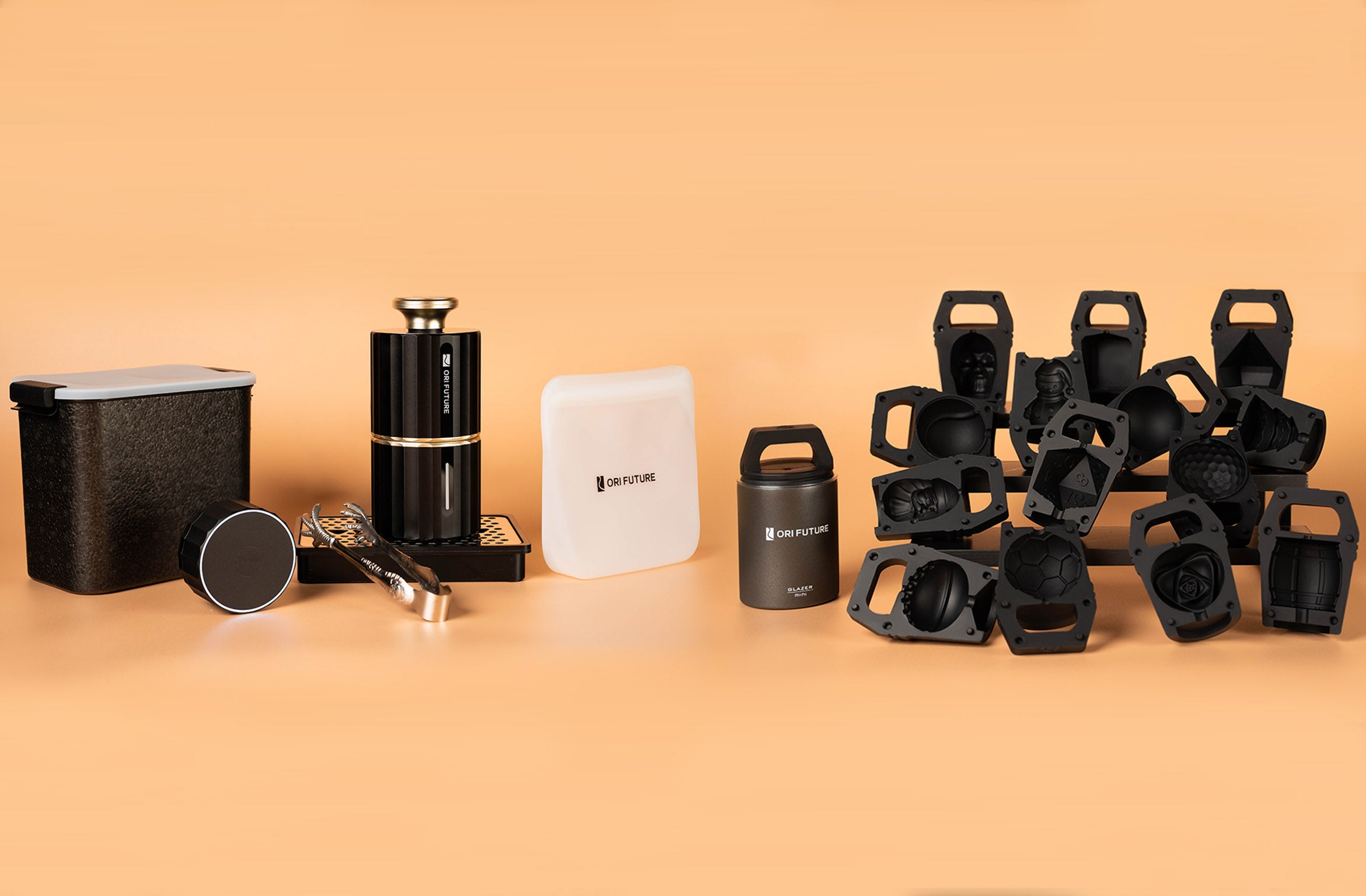
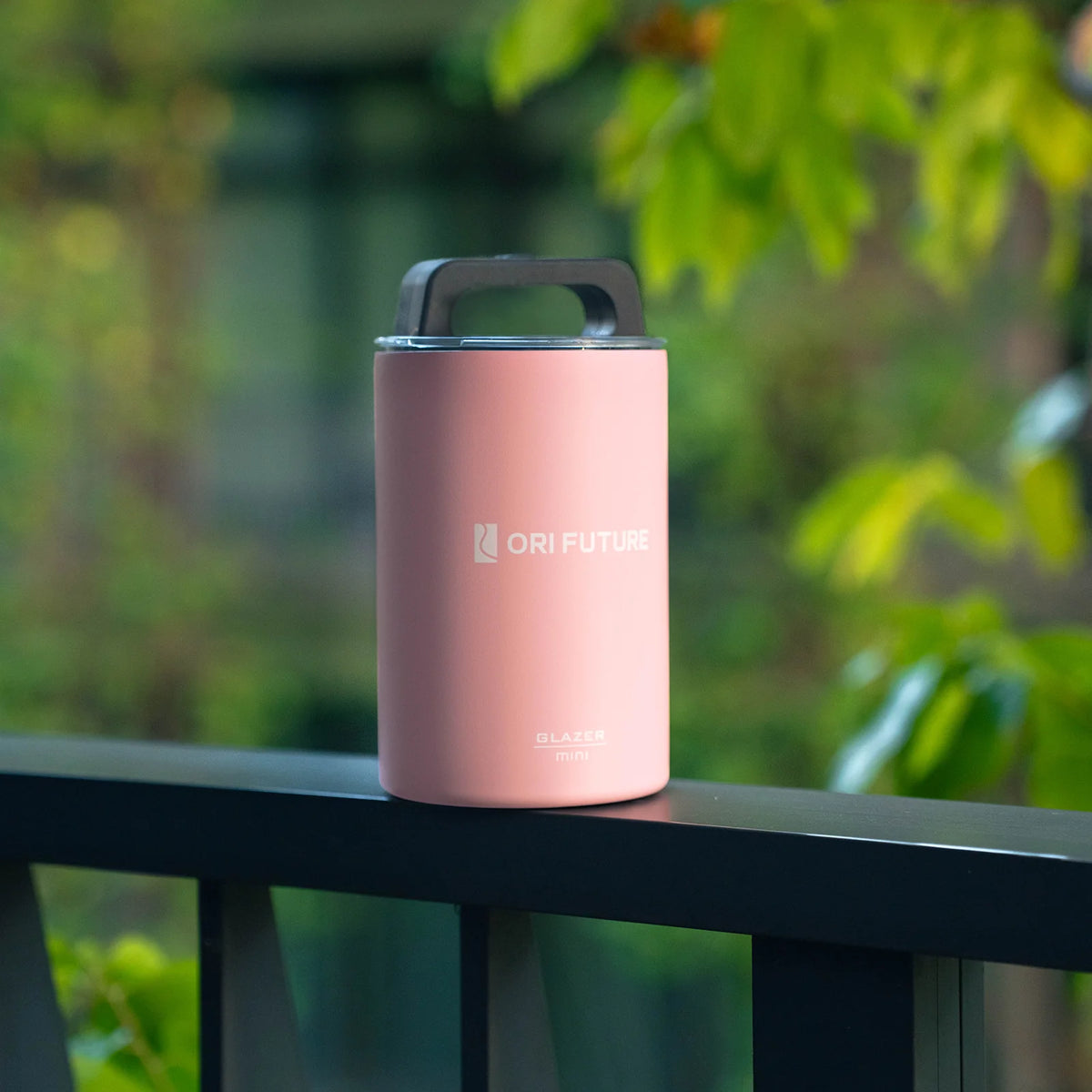
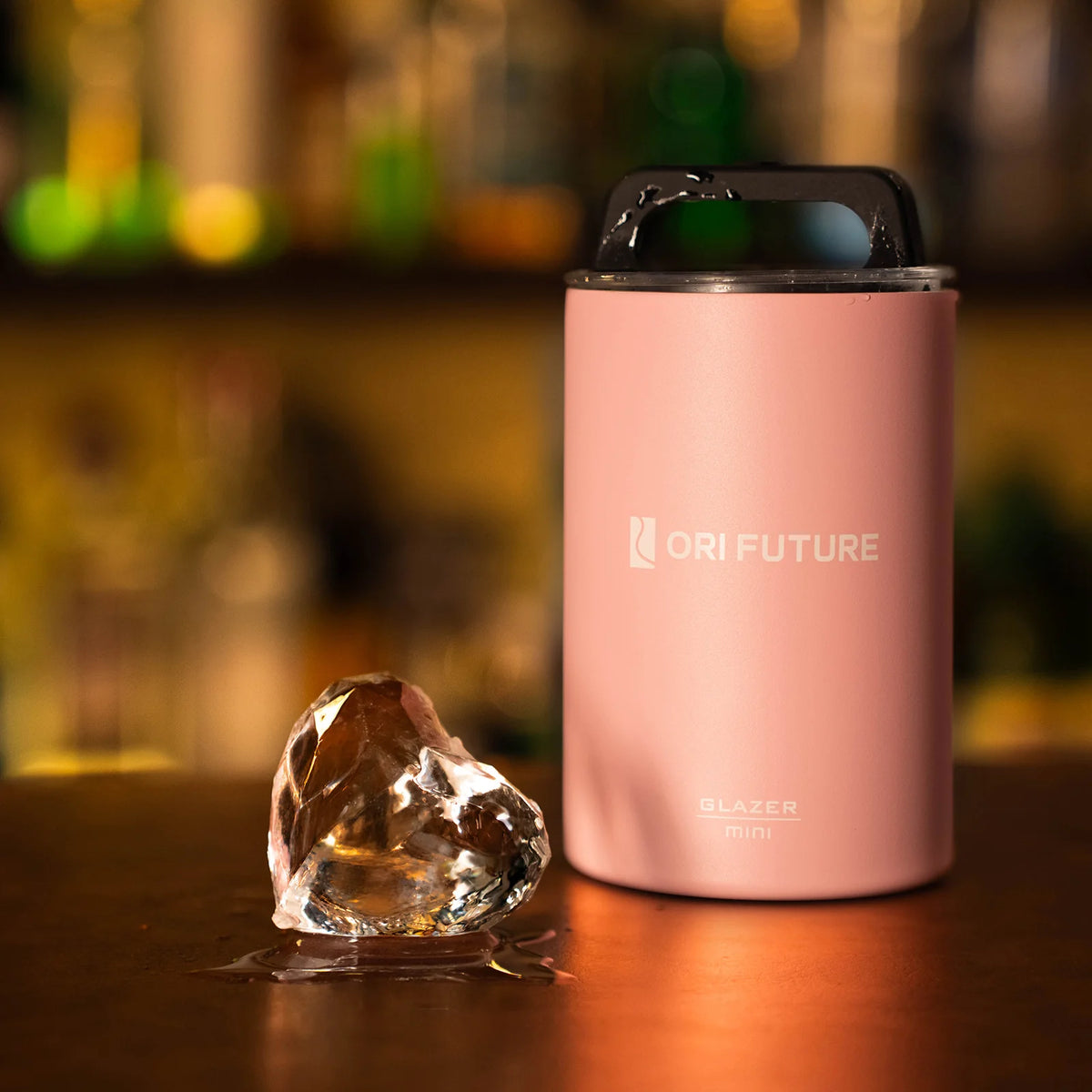
The GLAZER ICE Press uses a precise 600W heated core (100°F) to mold a clear ice block into a perfect sphere, diamond, heart, skull, or Saturn ring in about two minutes. Its magnetic connection system makes changing shapes effortless, and the twist-to-lock mechanism ensures safe, one-handed operation.
Dilution and Taste: How Ice Shape Impacts Your Drinking Experience
Dilution is not the enemy in mixology; it's an essential ingredient. The right amount of water can soften alcohol's burn, release aromatic compounds, and integrate flavors. The problem is uncontrolled dilution. A standard cube's rapid melt can water down the first third of your drink, leaving the rest lackluster. A spherical ice cube acts as a time-release dilution module. It delivers a gentle, consistent trickle of water, harmonizing with the spirit rather than drowning it. This is especially crucial for high-proof spirits or cocktails with delicate botanical balances, like a Martini or a Negroni, where every drop of meltwater significantly impacts the final taste.
Modern Ice Technology: Beyond Traditional Trays
The Evolution of Home Ice Crafting
The journey from cloudy, crescent-moon ice cubes from a plastic tray to crystal-clear spheres has been remarkable. Silicone molds were a first step but often trapped air bubbles. Manual Japanese-style ice presses required patience and muscle. Today, technology like the GLAZER Press has democratized professional ice. By using controlled heat (not brute force) to melt ice into a polished shape, it bypasses the problems of cloudiness and physical effort, delivering bar-quality results on your countertop in minutes.
Creative Applications for Different Ice Shapes
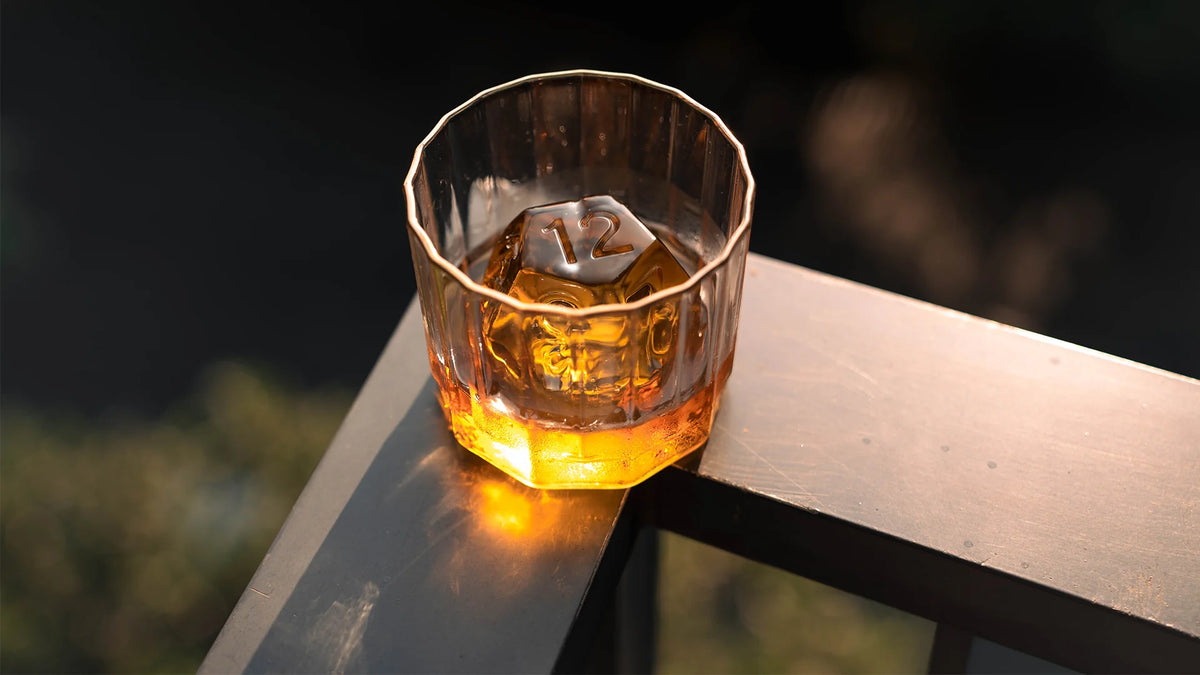
With technology enabling multiple shapes, your ice can match the occasion. Use a heart for an anniversary, a skull for a Halloween party, or a Saturn ring for a space-themed gathering. Each shape has a slightly different surface area, allowing you to fine-tune cooling and dilution. A diamond, with its facets, might melt a touch faster than a perfect sphere but creates dazzling light effects. This blend of science and artistry is the new frontier of home entertaining.
Serving Suggestions: Maximizing the Benefits of Spherical Ice
To get the most from your spherical ice:
- For Premium Spirits (Neat or On the Rocks): Use one large 2-3 inch sphere. It will chill the spirit gently and melt minimally over a long sipping session.
- For Spirit-Forward Cocktails (Old Fashioned, Negroni): A 1.5-2 inch sphere or one large cube is perfect. It provides enough cooling while protecting the cocktail's integrity.
- For Highballs & Tall Drinks: Stick with multiple standard cubes. You need faster cooling and more dilution to balance the larger volume of mixer.
- Pro Tip: Start with room-temperature spirits and glasses. A very cold glass can cause the sphere to freeze-stick, reducing liquid contact and cooling efficiency.
Comparison Table: Spherical Ice vs. Traditional Cubes
| Characteristic | Ice Sphere | Traditional Ice Cube | Practical Implication |
|---|---|---|---|
| Surface Area to Volume Ratio | Lowest possible (~80% of a cube's area) | Higher than a sphere | Sphere has less contact with liquid, leading to slower melting. |
| Melting Rate | ~0.113 g/s (slower) | ~0.162 g/s (faster) | Spheres melt approximately 43% slower by weight. |
| Cooling Speed | Slower, more gradual | Faster, more intense | Cubes better for quick-chill; spheres better for sustained cool. |
| Dilution Impact | Minimal, gradual, controlled | Higher, faster, less controlled | Spheres preserve drink integrity far longer. |
| Visual Appeal | Elegant, premium, modern | Classic, functional, familiar | Spheres significantly elevate presentation. |
| Best Drink Applications | Neat spirits, Old Fashioneds, slow-sipped cocktails | Highballs, shaken cocktails, sodas, rapid consumption | Match the shape to the drinking pace and purpose. |
Frequently Asked Questions (FAQ)
Common Questions About Spherical Ice
Do spherical ice cubes actually melt slower than regular cubes?
Yes, absolutely. Controlled scientific experiments show ice spheres melt about 20-40% slower than an equivalent volume of standard ice cubes. This is due to their superior (smaller) surface-area-to-volume ratio, which is a fundamental principle of geometry and heat transfer.
Are there any downsides to using spherical ice?
Spherical ice cools a drink slightly more slowly initially than multiple small cubes. Also, a single large sphere may not be ideal for drinks meant to be diluted quickly or consumed fast, like a Gin & Tonic. Finally, creating perfect spheres typically requires more than a standard ice tray—either molds, a press, or a dedicated machine.
What's the best way to make clear ice spheres at home?
For the clearest ice, use directional freezing (insulating the top of a container so ice freezes slowly from one direction, pushing impurities down). For perfect shape and clarity with convenience, a device like the GLAZER Press is ideal. It uses a heated core to melt a pre-made clear ice block into a flawless shape in about two minutes.
Is investing in a tool like an ice press worth it?
If you regularly enjoy neat spirits, whiskey on the rocks, or craft cocktails at home, an ice press is a game-changer. It elevates the experience by providing professional-level control over dilution and presentation. The versatility of multiple shapes (like those offered by the GLAZER Press) also adds a fun, creative element to hosting.
Conclusion & Final Recommendations
The science is clear: spherical ice cubes do melt slower. This isn't a mere bartending gimmick but a practical application of physics that results in a better drinking experience. By minimizing surface area, a sphere reduces dilution and provides gradual, consistent cooling, making it the undisputed champion for savoring premium spirits and spirit-forward cocktails.
For the home enthusiast looking to elevate their bar, the path forward involves moving beyond the standard tray. Embracing tools like the GLAZER Press whiskey ice ball machine puts the art and science of professional ice craftsmanship at your fingertips. It combines efficiency, versatility, and stunning results, allowing you to master the final, crucial ingredient in your glass: perfectly shaped ice that melts at the perfect pace.
Final Verdict: Choose spherical ice for slow-sipped quality. Choose cubes for speed and efficiency. And with modern technology, you no longer have to choose just one—you can have the perfect ice for every drink and every occasion.
